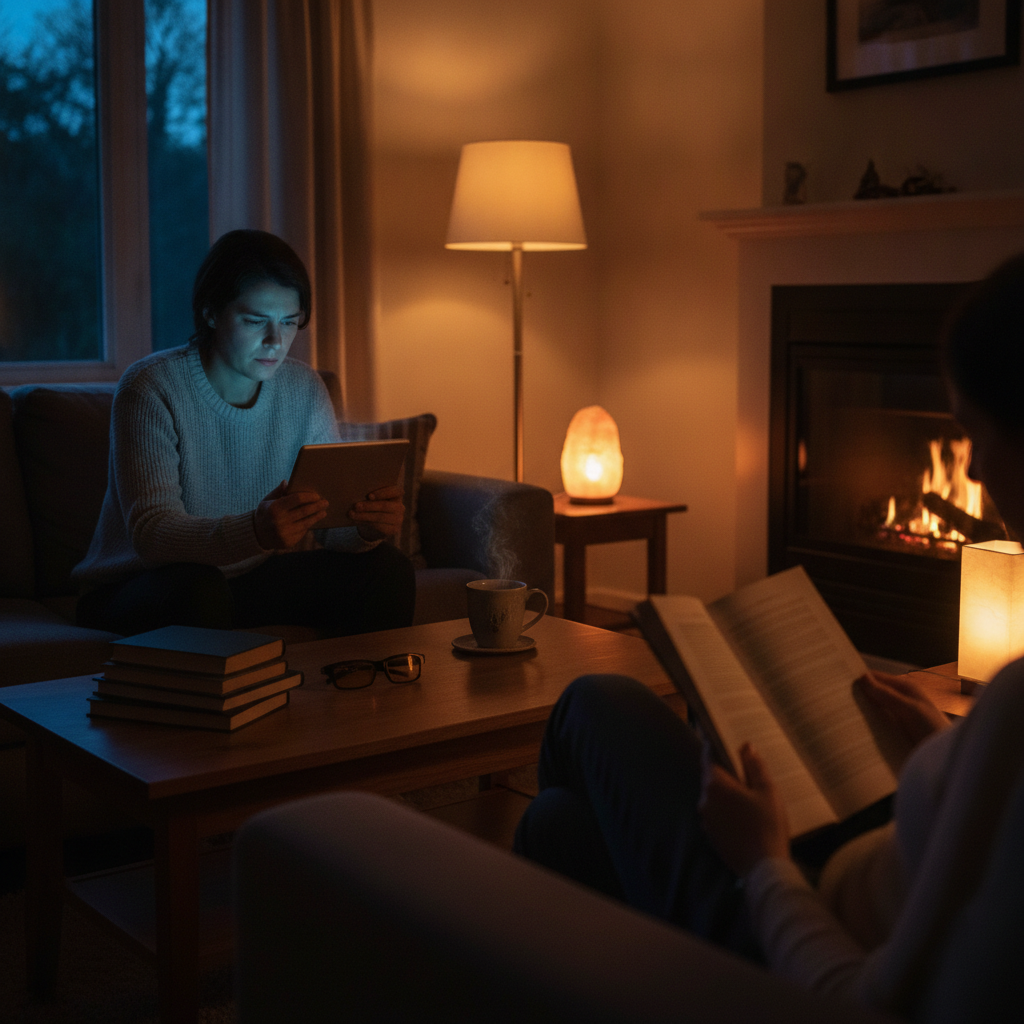
Most people know that screens before bed aren't great for sleep, yet the habit persists because the connection between light exposure and actual biology feels abstract. When you understand what's happening inside your body during those evening scroll sessions, the motivation to make even small changes becomes a lot more concrete.
Your brain relies on a precise hormonal signal to shift into sleep mode. Melatonin — released by the pineal gland in response to darkness — is that signal, and it's surprisingly sensitive to light wavelength. Blue light, which sits in the 400–490 nanometer range on the visible spectrum, is particularly good at suppressing melatonin production. Screens, overhead LED fixtures, and even certain energy-efficient bulbs all emit meaningful amounts of it. Exposure to these sources after sunset can delay melatonin onset by anywhere from 45 minutes to over two hours, pushing your body's internal clock later without you ever realizing it. Over time, that delay accumulates into chronic tiredness, poor sleep quality, and mood disruption that's hard to trace back to its source.
The good news is that you don't have to overhaul your entire evening. A handful of targeted swaps — made consistently — can meaningfully restore the hormonal cues your body needs.
Switch Your Overhead Lighting to Warm Bulbs After Dark
The overhead lights in most kitchens, living rooms, and bathrooms are tuned to a daylight or cool-white color temperature, which works well during the day but keeps your nervous system alert long into the evening. Replacing them with warm-toned bulbs rated at 2700K or below is one of the most passive and effective changes you can make. Brands like Philips and GE both offer affordable warm LED options that require no apps or timers — you just screw them in. Your room will feel cozier, and your brain will begin interpreting the softer light as a cue that the day is winding down.
Enable Night Mode Settings on Every Screen You Own
Most phones, tablets, and computers now include a built-in color temperature shift that reduces blue light output during evening hours. On iPhones, this is called Night Shift; on Android devices and Windows PCs, similar features exist under display or accessibility settings. Schedule these to activate automatically around sunset so you don't have to remember. The amber-toned screen won't eliminate blue light entirely, but it meaningfully reduces the signal your retinal cells are sending to your brain's clock. It's a low-effort step that compounds every night.
Use Blue Light Filtering Glasses During Evening Screen Time
If you regularly use screens during the hour or two before bed — whether for work, reading, or winding down with a show — a pair of amber-lens glasses adds another layer of filtering that app settings alone can't fully provide. Companies like Felix Gray and Swanwick make versions designed specifically for evening use with deeper amber tints than daytime pairs. Wearing them while watching television in a normally lit room can make a noticeable difference in how quickly you feel ready for sleep. Think of them as a portable dimmer switch for your visual environment.
Dim All Lights Two Hours Before Your Target Bedtime
Brightness matters as much as color temperature. Even warm-toned light at high intensity can suppress melatonin if it's bright enough. Using dimmer switches, turning off overhead lights in favor of floor or table lamps, or simply reducing the number of lights running in a room creates a gradual transition that mirrors what happens at dusk in nature. This dimming period gives your melatonin a runway to build rather than being abruptly cut off and then expected to surge the moment your head hits the pillow. Two hours is a reasonable window; even one hour makes a measurable difference.
Replace Your Bedroom Ceiling Light With a Lamp or Salt Lamp
The bedroom ceiling light is one of the most disruptive sources in many homes because it casts bright, diffuse illumination across your entire visual field right up until the moment you turn it off. Switching to a bedside lamp with a warm, low-wattage bulb changes the light's direction and intensity dramatically. Some people enjoy Himalayan salt lamps as an ambient option — they emit a dim, reddish-orange glow that has virtually no melatonin-suppressing effect. Whatever you choose, the goal is light that stays low and localized rather than flooding the room from above.
Swap the Late-Night News for a Low-Screen Wind-Down Ritual
The content you consume matters almost as much as the device itself. News programs, social media feeds, and alert-heavy apps trigger cortisol responses that work against melatonin even when the screen brightness is dialed down. Replacing that habit — even three nights a week to start — with something lower stimulation can meaningfully shift how quickly you fall asleep. Reading a physical book, doing a short stretching routine, or listening to a podcast with your phone face-down are all options that keep your hands busy without feeding visual blue light directly into your eyes at close range.
Install Smart Bulbs That Shift Color Temperature Automatically
If you want a more hands-off approach, smart bulbs from systems like Philips Hue or LIFX can be programmed to gradually warm and dim throughout the evening on a schedule that mirrors the sun. You set it once and forget it. The transition from cool daylight tones in the afternoon to warm amber light after sunset happens automatically without requiring willpower or routine changes. It's a slightly higher upfront investment than swapping standard bulbs, but for households where multiple people are involved or where lighting consistency is hard to maintain manually, it removes friction almost entirely.
Keep the Hour Before Bed as Screen-Free as You Can Manage
All the filters and amber lenses in the world are a workaround for the most effective option, which is simply reducing screen time in the final hour before sleep. This doesn't have to be an all-or-nothing rule — even cutting screen exposure from 90 minutes down to 30 makes a real difference in melatonin timing. The body doesn't need complete darkness to begin the process; it needs a meaningful reduction in light intensity and blue wavelength input. Starting with just 20 minutes of screen-free time before bed and gradually extending it gives your biology the signal it's been missing.
Small, consistent changes beat perfect routines that don't stick. Picking even one or two of these swaps and building them into your evenings this week is enough to start shifting how your nights feel. Your sleep doesn't have to be a mystery — it responds to simple, repeatable cues, and you have more control over those cues than most people realize.