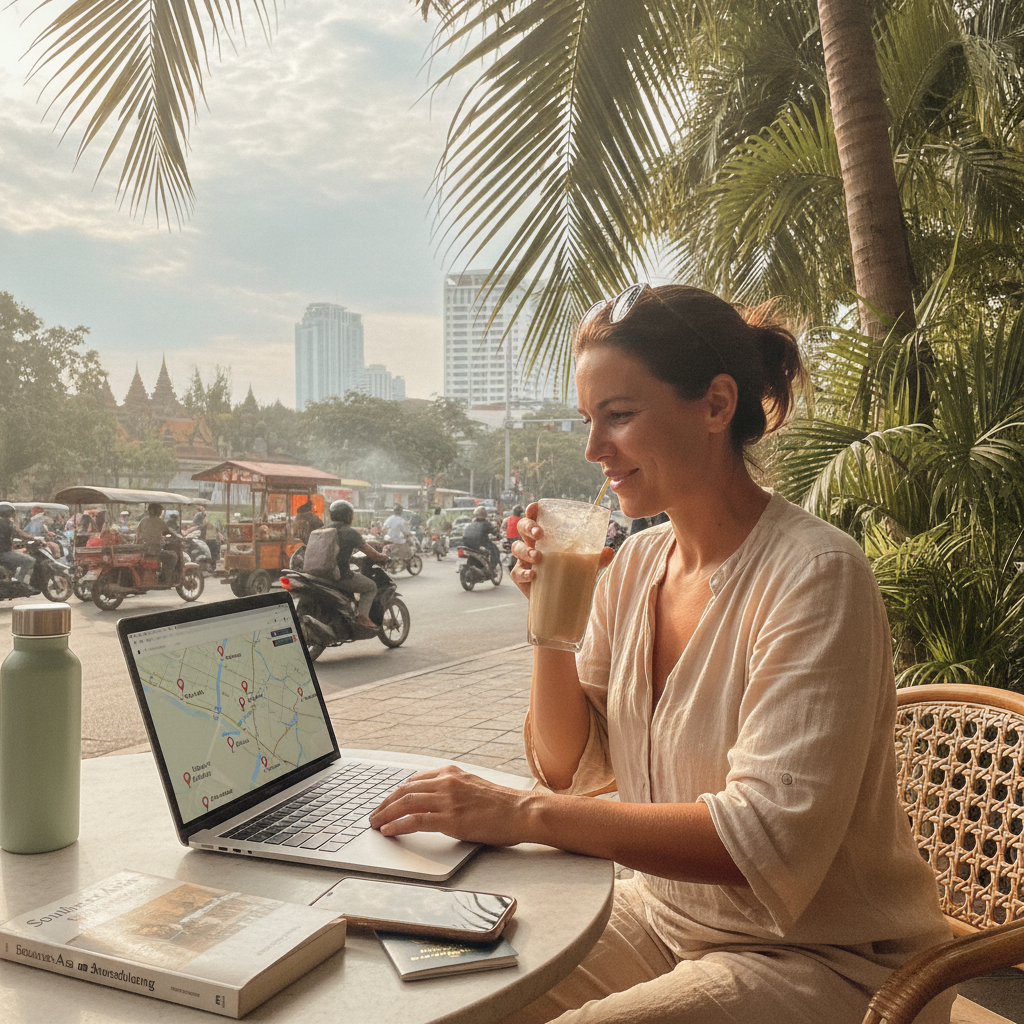
Remote work has made it genuinely possible to swap a studio apartment and a commute for a rented room in Chiang Mai, a co-working café in Canggu, or a high-rise in Kuala Lumpur — without touching your career. More people are doing exactly that, spending a full month or more in one Southeast Asian city rather than hopping between places every few days. The challenge isn't access or affordability. It's knowing how to pick the right city for your specific working style, budget, and daily rhythm before you book the flight.
Start With a Realistic Budget Breakdown
Before you compare cities, get clear on what you actually need to spend each month. Southeast Asia has a wide cost range — Kuala Lumpur and Singapore sit at opposite ends from Chiang Mai and Hoi An. Factor in rent, food, co-working space memberships, transport, and health insurance. Most remote workers find that mid-tier cities in Thailand, Vietnam, or Malaysia offer a strong quality of life at a fraction of Western costs, but "affordable" means something different depending on your lifestyle. Run your numbers honestly before you fall in love with a destination.
Treat Internet Reliability as a Non-Negotiable
Your income depends on consistent connectivity, so internet speed and reliability should rank near the top of your evaluation criteria. Cities like Chiang Mai, Medellín-equivalent hubs in Southeast Asia, and central Kuala Lumpur have developed strong digital infrastructure largely because remote workers and long-term travelers demanded it. Before committing to an apartment, check coverage maps, read recent reviews on co-working spaces, and ask in expat Facebook groups about current conditions. A beautiful rooftop view means very little during a client call that keeps dropping.
Match the City's Energy to Your Work Style
Some people thrive in the low-key pace of a smaller city like Chiang Mai, where coffee shops are quiet, co-working spaces are uncrowded, and evening life doesn't pull too hard. Others need the buzz of a major metro — Kuala Lumpur, Ho Chi Minh City, or Bangkok — to feel stimulated and connected. Think honestly about whether a slow, neighborhood-focused environment will help you focus or leave you restless after two weeks. The best home base isn't the most popular one; it's the one that matches how you actually work and recharge.
Research Visa Rules Before You Commit
Visa policy is one of the most overlooked factors in choosing a base city, and getting it wrong can cut your stay short or create headaches you didn't plan for. Thailand, Malaysia, Indonesia, and Vietnam each have different rules around tourist stays, digital nomad visas, and extensions. Malaysia's long-term DE Rantau program and Thailand's Long-Term Resident visa are worth understanding if you plan stays longer than thirty days. Regulations shift, so cross-reference the official embassy sites and current nomad community forums before finalizing your destination.
Scope Out the Co-Working Scene Ahead of Time
A solid co-working space does more than provide a desk — it gives you structure, community, and a reason to leave your apartment. Cities like Chiang Mai, Bali's Canggu neighborhood, and central Kuala Lumpur have well-established co-working ecosystems with options ranging from budget drop-in desks to private offices with printing and meeting rooms. Look for spaces that offer month-long memberships rather than daily rates, since costs drop significantly with a commitment. Check whether the membership includes reliable guest Wi-Fi, dedicated desks, and other amenities that matter to how you actually work.
Consider Healthcare Access and Emergency Options
Spending a full month somewhere means you're not just passing through — you're temporarily living there, and that changes how much the local healthcare system matters. Cities like Bangkok and Kuala Lumpur have internationally accredited hospitals with English-speaking staff and relatively straightforward billing. Smaller cities and more rural areas can mean longer travel times to quality care. Make sure your travel health insurance covers the country you're staying in, and look up the nearest reputable clinic or hospital before you need one. Preparation here rarely feels urgent until it suddenly is.
Evaluate the Neighborhood, Not Just the City
Two people living in Bangkok can have completely different experiences depending on which neighborhood they're in. Sukhumvit offers a fast, cosmopolitan lifestyle with easy transit access, while areas like Ari or Phra Khanong feel quieter and more local. In Chiang Mai, the Nimman area is walkable and expat-friendly, while the Old City has more character but fewer co-working options. Spend time on Google Maps, Airbnb neighborhood guides, and recent nomad forums to understand the daily texture of where you'd actually be living. A great city in the wrong neighborhood can still be a frustrating month.
Test the City Before Locking In Long-Term Accommodation
If your schedule allows, spend the first week in a flexible short-term rental before committing to a month-long lease. This gives you time to confirm that the neighborhood feels right, that your chosen co-working space actually works for you, and that the city's daily pace matches what you expected. Platforms like Airbnb and local options like Hipflat in Thailand make it easy to find weekly options. Locking into a month-long lease based on photos and reviews alone is a gamble — a short pilot stay costs a bit more upfront but saves you from a month of regret.
Factor in Community and Social Infrastructure
Working remotely in a city where you know no one can shift from freeing to isolating faster than expected, especially past the two-week mark. Cities with strong nomad communities — Chiang Mai and Canggu being the clearest examples — have regular meetups, community Slack groups, and enough transient professionals that making connections takes less effort. If community matters to you, factor in how active the local nomad scene is before choosing a quieter but less connected city. The social layer of a remote work stay often determines whether a month there becomes a memory you want to repeat.
The remote work travel model is maturing quickly, and Southeast Asian cities are responding. More governments are formalizing long-stay visa options, co-working infrastructure keeps improving in second-tier cities, and the broader ecosystem of services aimed at monthly residents — from furnished apartments to local SIM card plans with high data caps — is becoming more reliable. Choosing a home base thoughtfully now means you'll build a mental checklist that travels with you, making every future stay easier to plan and more rewarding to actually live.