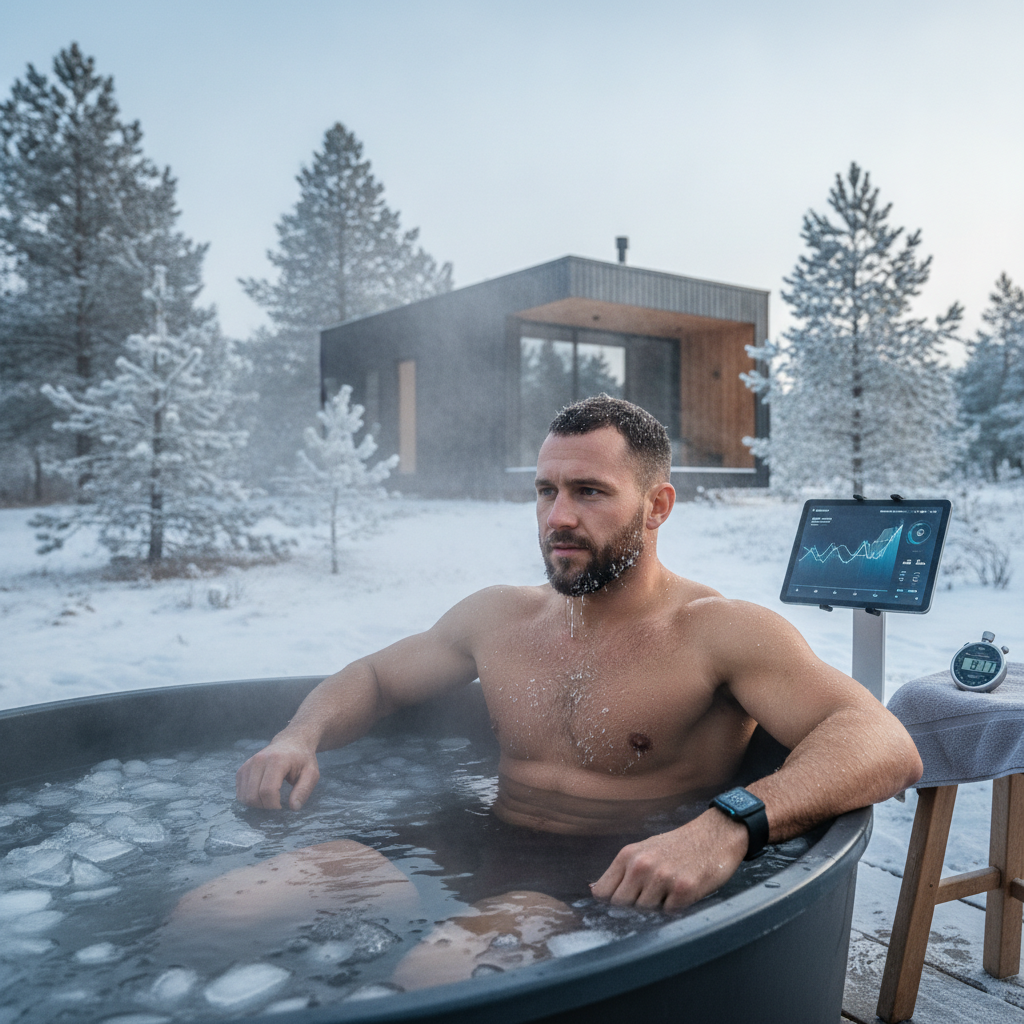
Cold exposure therapy has moved well beyond the locker room and into mainstream wellness culture, with athletes, biohackers, and everyday fitness enthusiasts all claiming it speeds recovery and reduces soreness. The practice ranges from cold showers to dedicated ice baths to whole-body cryotherapy chambers marketed by brands like CryoUSA and CRYO Science. What's less clear is whether the physiological benefits match the enthusiasm. Understanding what cold exposure actually does — and where its limitations begin — requires a closer look at the mechanisms behind it.
What Happens to the Body During Cold Exposure?
When the body is immersed in cold water or exposed to cold air, blood vessels near the skin constrict in a process called vasoconstriction. This reduces blood flow to the extremities and drives it toward the core organs. At the same time, nerve conduction slows, which blunts the perception of pain and reduces local inflammation. The body also triggers thermogenesis, generating heat through metabolic activity and, in cold-adapted individuals, brown fat activation. These physiological responses are real, well-documented, and form the scientific foundation for why cold therapy is thought to support recovery.
How Cold Therapy Is Thought to Reduce Muscle Soreness
Delayed onset muscle soreness — commonly known as DOMS — is caused by microscopic damage to muscle fibers and the inflammatory response that follows intense exercise. Cold exposure is believed to interrupt this cycle by reducing metabolic activity and swelling in the affected tissue. Lower tissue temperatures slow enzyme activity and limit secondary cell damage that often extends beyond the initial workout injury. Research consistently shows that cold water immersion reduces perceived soreness in the hours and days following strenuous exercise. The question is whether reduced soreness translates into faster return to full performance capacity, which is a meaningfully different outcome.
Where the Evidence Gets More Complicated
The most significant critique of cold therapy centers on adaptation interference. Inflammation following exercise isn't purely damaging — it's a key signal that drives muscle repair and long-term strength gains. Several investigations have found that regular post-exercise cold immersion can blunt the muscle protein synthesis response and reduce hypertrophy over time when used after resistance training. Athletes prioritizing strength or muscle growth may actually be slowing their long-term progress. For endurance athletes or those focused on performance between training sessions rather than maximizing adaptation, the tradeoff calculation shifts significantly in favor of cold therapy.
What Types of Athletes Actually Benefit Most?
The clearest evidence supports cold exposure for athletes managing heavy training loads with frequent competition windows — think professional soccer players at clubs like Tottenham Hotspur or cyclists managing multi-day stage races. In these contexts, reducing soreness quickly enough to compete again within 24 to 48 hours matters more than optimizing long-term adaptations from any single session. Cold water immersion, typically at temperatures between 10 and 15 degrees Celsius for 10 to 15 minutes, is the most studied protocol in these populations. Recreational athletes working to build strength on a 3-to-4 day weekly schedule gain far fewer measurable benefits and may actually compromise their results.
Is Whole-Body Cryotherapy Equivalent to Ice Baths?
Whole-body cryotherapy, offered by commercial providers in cities like Los Angeles and New York, exposes the body to extremely cold air rather than cold water immersion. The sessions are short — typically two to three minutes — and marketed heavily around recovery, inflammation reduction, and even mood improvement. The actual core body temperature change during whole-body cryotherapy is far less dramatic than what occurs during cold water immersion. Current evidence suggests cryotherapy chambers produce similar subjective soreness relief and perceived recovery but likely don't replicate the deeper physiological effects of sustained cold water contact. The experience may be more comfortable, but the mechanisms differ.
How You Can Apply This Information Practically
If you're primarily focused on building muscle or improving strength, reserving cold exposure for rest days or using contrast therapy — alternating warm and cold — may preserve adaptation benefits while still offering some recovery support. If your goal is performing well in back-to-back competition days or managing soreness during high-volume training blocks, post-session cold water immersion of around 10 to 15 minutes remains a well-supported tool. You don't need an expensive cryotherapy chamber to benefit — a cold bath with ice from a standard grocery run works just as well based on available evidence. Consistency matters more than access to elite equipment, and timing your cold exposure relative to your training goals will determine whether it helps or interferes.
Cold exposure therapy produces genuine physiological effects that can meaningfully reduce perceived soreness and support short-term recovery between training sessions. The evidence is strongest for high-frequency athletes managing competition schedules and weakest for those prioritizing strength or hypertrophy adaptations over time. Like most tools in exercise science, its value depends heavily on who is using it, when they are applying it, and what outcome they are actually trying to optimize.