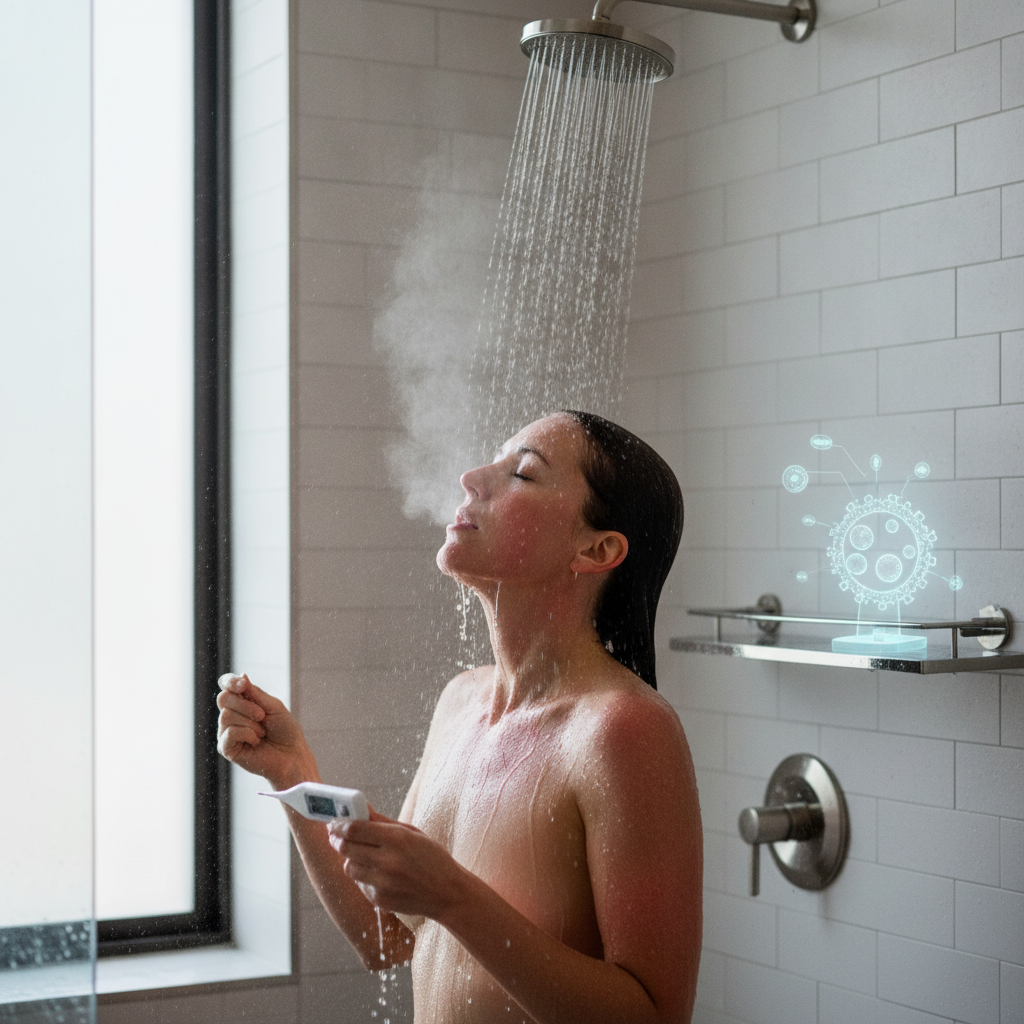
The human immune system is more responsive to environmental cues than most people realize, and one of the simplest cues available happens in the bathroom every morning. Ending a warm shower with a brief blast of cold water — a practice sometimes called contrast showering or cold finishing — has drawn growing attention from researchers and health-conscious communities alike. The physiological changes it triggers are measurable, and for many people, consistent enough to matter over time.
The Immediate Physiological Shift Cold Water Triggers
When cold water contacts the skin, the body initiates a rapid stress response. Blood vessels near the surface constrict, core temperature is protected, and the nervous system activates what's broadly described as a sympathetic surge. Heart rate climbs briefly, breathing quickens, and the adrenal glands release a small pulse of norepinephrine. This isn't distress in the harmful sense — it's acute hormetic stress, the kind the body adapts to with repeated exposure. That adaptation process is precisely where immune relevance begins to emerge.
How Cold Exposure Relates to Immune Cell Activity
Research into cold water immersion and finishing showers consistently points to changes in circulating immune cells. Natural killer cells — a class of lymphocytes that target virus-infected cells and abnormal tissue — appear in higher concentrations in the bloodstream shortly after cold water exposure. White blood cell counts also show temporary elevation. These shifts suggest the body is redistributing immune resources, mobilizing defensive cells in response to the perceived thermal challenge. The response isn't dramatic, but it reflects a genuine modulation of immune readiness rather than simple discomfort.
The Role of Norepinephrine in Immune Modulation
Norepinephrine, the same neurotransmitter elevated during cold exposure, plays a meaningful role in regulating inflammation. Elevated norepinephrine has been associated with reduced levels of certain pro-inflammatory cytokines, which are signaling proteins the immune system uses to coordinate inflammatory responses. Chronic low-grade inflammation is linked to a range of long-term health concerns, so any reliable, non-pharmacological way to moderate it is worth examining. Cold finishing showers, practiced consistently over weeks, appear to support a more balanced baseline inflammatory state in some individuals — not by suppressing immunity, but by recalibrating how it operates.
What Consistent Practice Appears to Do Over Time
A single cold rinse produces temporary effects. The more interesting question is what happens when the habit is sustained. People who maintain a cold-finishing shower routine over several weeks — as tracked in workplace wellness programs and independently by users of apps like Wim Hof Method and similar breathwork platforms — often report fewer sick days and a general sense of physical resilience. The mechanism likely involves repeated hormetic adaptation: the body becomes more efficient at mounting and resolving immune responses because it is regularly practiced at managing acute physiological stress. The immune system, like a muscle, responds to trained challenge.
Realistic Expectations and Individual Variation
Cold water at the end of a shower is not a replacement for sleep, nutrition, or other foundational health behaviors. Its immune benefits are real but modest, and they vary considerably by individual. People with cardiovascular conditions, Raynaud's disease, or certain autoimmune disorders should consult a physician before adopting the practice. Cold exposure also interacts with the body's baseline stress load — someone already experiencing chronic stress may find the added physiological burden counterproductive rather than stimulating. The Wim Hof Method community and facilities like the Othership in Toronto have worked to document user experiences, but individual results remain genuinely variable.
How to Incorporate Cold Finishing Showers Effectively
For those interested in trying it, consistency and gradual progression matter more than intensity. Starting with the coldest setting available and enduring it for thirty seconds is less effective as a long-term habit than starting with cool water for ten to fifteen seconds and building from there. The goal is mild but genuine discomfort — not pain. End the cold phase with slow, deliberate breaths rather than panicked gasping, which helps the nervous system register the experience as controlled rather than threatening.
You don't need special equipment, a spa membership, or an elaborate routine. A standard household shower adjusted to its coolest setting is sufficient. Start at the end of your normal shower when your body is already warm, run the cold water for twenty to thirty seconds, and focus on slow nasal breathing throughout. Over two to four weeks, gradually extend the duration toward sixty to ninety seconds. Track how you feel in the mornings, how quickly you recover from minor illness, and whether your energy patterns shift. The cumulative picture tends to be more informative than any single session.
As interest in practical, low-cost health optimization continues to expand, cold finishing showers are likely to receive more structured scientific attention. Wearable health monitors, continuous glucose trackers, and HRV devices are already making it easier for individuals to observe how their bodies respond to practices like this in real time. The coming years will probably clarify the dose-response relationship more precisely — how long, how cold, and how often produce meaningful immune adaptation versus diminishing returns. For now, the evidence is promising enough that the practice is worth exploring, and the barrier to entry is nothing more than a willingness to turn the knob a little further left.