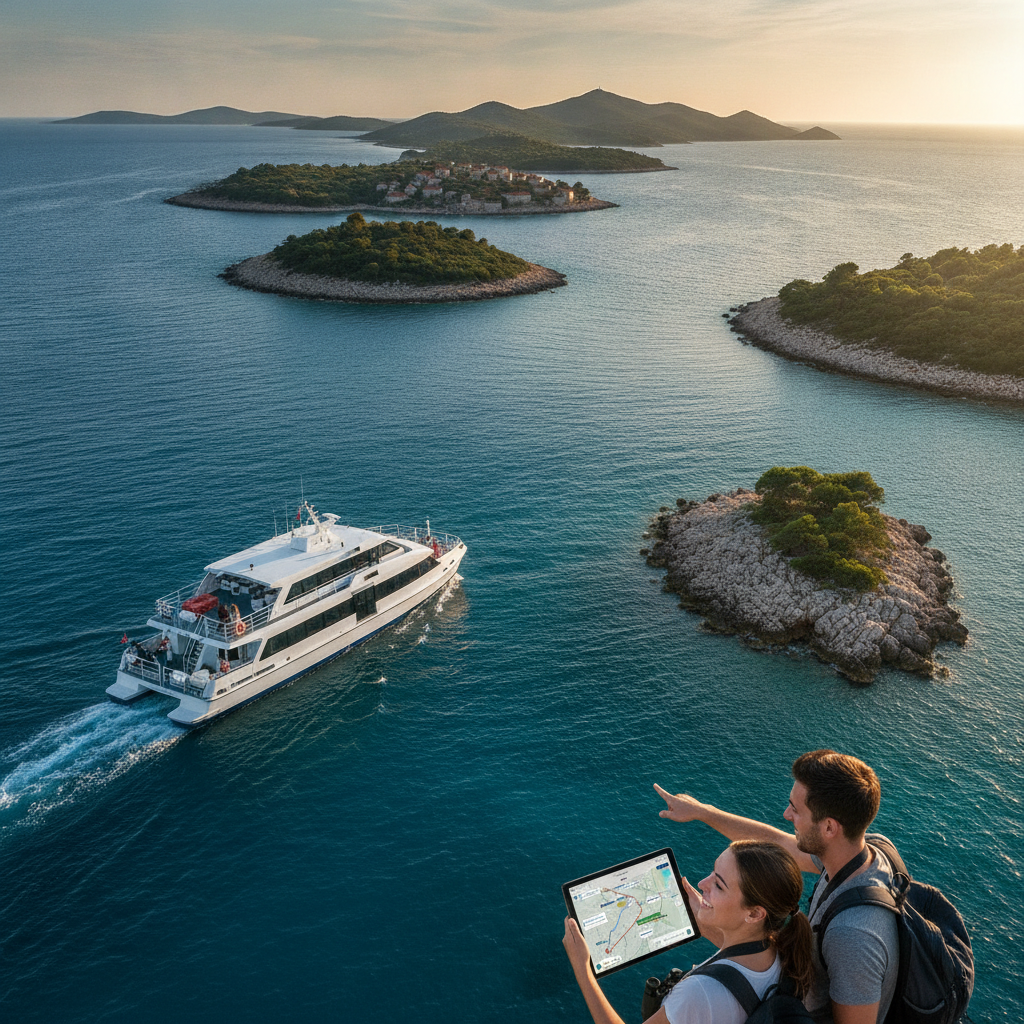
The Croatian coast is one of those places that looks like a postcard from every angle — shimmering Adriatic water, limestone cliffs, stone villages draped in bougainvillea. But if you've ever booked a package tour and found yourself shuffled between Hvar and Korčula with hundreds of other visitors, you know the feeling of sensing that something richer is just out of reach. It is. And the way to get there is simpler than most travelers realize: regional ferry networks operated by Jadrolinija and a handful of smaller catamaran companies connect dozens of islands that guided itineraries routinely ignore.
Learn How Jadrolinija Routes Actually Work
Jadrolinija is Croatia's main state-run ferry operator, and its network is genuinely extensive — spanning car ferries, passenger-only catamarans, and slower coastal lines that wind their way along the entire Dalmatian coast. Most travelers interact with only the busiest routes, usually Split to Hvar or Dubrovnik to Korčula. But Jadrolinija publishes full timetables for dozens of additional connections that link smaller islands like Vis, Lastovo, and Mljet to the mainland. Spending twenty minutes studying the full route map before your trip will show you a completely different picture of what's reachable.
Start Your Planning at the Ferry Terminal, Not Online
Once you're in Split or Zadar, the local ferry terminals are filled with printed timetable booklets that go beyond what shows up easily in English-language searches. Staff at the ticket windows are generally helpful, and other travelers — especially long-term backpackers — often carry more useful island-hopping knowledge than any tour operator. Apps like Booking.com and Google Maps won't show you the 6:45 a.m. Jadrolinija departure to Šolta or the afternoon catamaran that swings through three small islands before reaching Hvar. You find those connections by asking in person or downloading the Jadrolinija app directly.
Build a Loose Island Chain Instead of a Fixed Itinerary
The smartest way to use ferry networks is to identify a rough chain of islands you want to move through, then book accommodation one or two stops ahead rather than locking everything down in advance. This approach works particularly well in shoulder season, when boats run on fuller schedules and smaller guesthouses have availability. For example, moving from Split to Šolta, then catching an onward ferry to Vis, then a small local catamaran toward Lastovo gives you a sequence of increasingly quieter islands — each one less visited than the last. Rigid pre-booking ties you to departure times that may not line up with what you discover on the ground.
Use Catamarans for Speed and Car Ferries for Flexibility
These two vessel types serve genuinely different purposes, and knowing which to use changes your experience. Catamarans are fast, passenger-only, and run on fairly fixed timetables — they're great for covering distance quickly and reaching islands where you'd rather walk or rent a scooter than bring a vehicle. Car ferries are slower and more frequent on major routes, but they're also the only way to bring your own transport. On islands like Brač or Korčula, having a car or scooter opens up inland villages that no day-trip visitor ever sees. Pick the vessel type based on how you want to move once you arrive.
Target Islands With Afternoon Departure Times
One underused trick is planning your island days around late afternoon departures rather than morning ones. Arriving on a smaller island the night before and catching an afternoon ferry to the next stop gives you a full morning to explore at a genuinely unhurried pace. Islands like Šolta and Drvenik Mali have almost no tourist infrastructure compared to Hvar, which means you'll share the morning with locals rather than tour groups. The afternoon catamaran back toward the main coastal towns is often nearly empty. Timing your movement this way costs nothing extra but completely changes the texture of the trip.
Don't Ignore the Zadar Archipelago in the North
Most island-hopping conversation centers on Dalmatia and the Split-to-Dubrovnik corridor, but the Zadar archipelago in northern Croatia is an entirely different world. Islands like Silba, Olib, and Molat are car-free, lightly visited, and connected by Jadrolinija ferries that run a few times a week. Silba in particular has no motorized vehicles of any kind — you arrive, leave your bags at a family-run guesthouse, and spend your time on foot or by bicycle. The ferry from Zadar to these islands takes a few hours and costs a fraction of a domestic flight, yet most itineraries built around Dubrovnik and Hvar never mention them.
Check Local Catamaran Companies for the Gaps
Jadrolinija doesn't cover everything. Smaller operators like Krilo run seasonal catamaran routes that fill in connections between islands and coastal towns, often with faster crossing times and more convenient departure windows. The TP Line and Bura Line also serve specific regional routes, particularly around the Kvarner Gulf near Rijeka in the north. Cross-referencing schedules from these operators against Jadrolinija's timetable will occasionally reveal a connection you didn't know existed — like a late-morning catamaran that links Vis to Lastovo and back, making a day trip to one of Croatia's most remote inhabited islands genuinely possible without an expensive private boat charter.
Stay Overnight on Islands That Only Get Day-Trippers
The most reliable way to experience a Croatian island the way it actually exists — rather than the version staged for organized tourism — is to stay overnight when everyone else leaves on the last afternoon ferry. Mljet National Park is a perfect example. Day-trippers from Dubrovnik pour in during the morning, walk the lakes, eat lunch, and leave by mid-afternoon. By early evening, the island settles into something completely different: local families at the single konoba still open, the lakes reflecting the last light, almost no noise. Booking a room at a local guesthouse for even one night costs far less than a Dubrovnik hotel and delivers an experience that no package itinerary can replicate.
The Croatian ferry network is genuinely one of the best tools available to independent travelers anywhere in Europe, and it's hiding in plain sight behind the tour operators who'd rather sell you a preset route. Give yourself a few extra days, download the Jadrolinija app, talk to the ticket staff, and start moving. The islands you find when you stop following the crowd are exactly the ones worth finding.