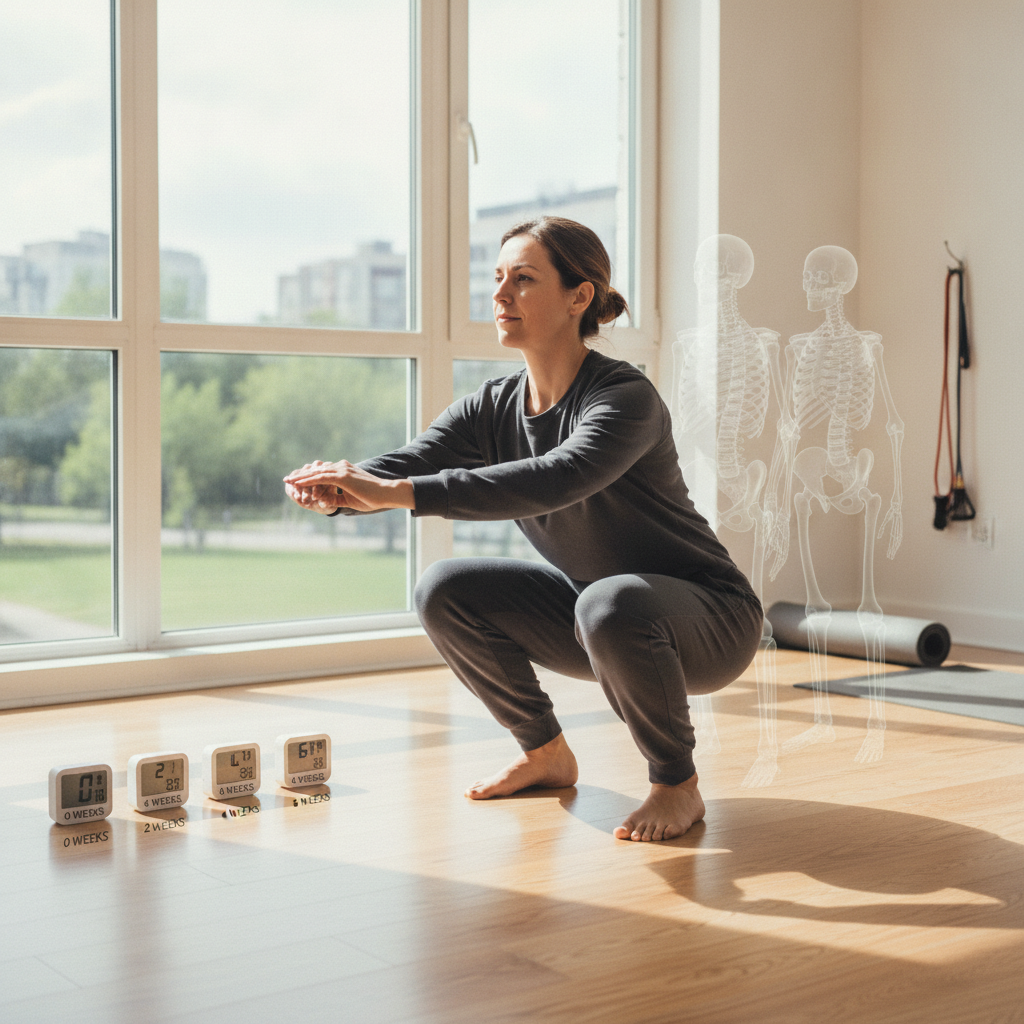
The human body is remarkably adaptive, and few positions reveal that adaptability as clearly as the deep resting squat. Across much of the world — from rural Southeast Asia to parts of South America and Africa — adults of all ages rest, eat, and socialize in a full squat without apparent discomfort. In populations where this posture is practiced daily, joint degeneration patterns differ noticeably from those observed in chair-dominant cultures. That contrast has drawn growing attention from physical therapists, movement researchers, and practitioners working within systems like the Functional Range Conditioning method, all examining what regular time in this position actually does to the body.
What the Deep Resting Squat Actually Demands From the Body
A full resting squat — heels flat on the ground, hips dropped below knee level, spine upright — asks a great deal of several joints simultaneously. The ankles need substantial dorsiflexion, the hips require deep flexion with external rotation, and the knees must tolerate a range they rarely experience in ordinary daily activity. For most adults who have spent years in chairs, the position initially feels impossible or uncomfortable. This is not a structural failure; it reflects tissue adaptation to limited range. The joints have simply adjusted to the ranges they are consistently asked to use, and the deep squat sits well outside that familiar territory.
How Ankle and Hip Mobility Change With Regular Practice
Ankle dorsiflexion is typically one of the first and most noticeable improvements. The ankle joint's range of motion limits are largely soft-tissue driven — calf muscles, the Achilles tendon, and the joint capsule itself all contribute. With consistent time spent in a deep squat, these tissues gradually adapt, allowing the shin to travel further forward over the foot. Hip mobility follows a similar arc. The hip capsule and surrounding musculature — including the psoas and deep external rotators — respond to repeated loading in end-range positions. Many practitioners report that after several weeks of daily squat holds, movements like crossing legs, rising from the floor, and climbing stairs begin to feel noticeably easier.
The Relationship Between Squatting and Spinal Alignment
Posture is not simply about standing straight — it reflects the accumulated habits of the entire skeletal system. Regular deep squatting tends to reduce the excessive anterior pelvic tilt that is common in people who sit for long periods. When the hips open and the posterior chain activates in a low squat, the pelvis learns to find a more neutral resting position over time. This shift carries through to the lumbar spine, often reducing the exaggerated lower back arch that contributes to chronic tightness. Physical therapists at clinics like [GOATA Movement](https://www.goata.com) and movement educators working with tools from the Original Strength system have documented these postural shifts as consistent findings among clients who adopt floor-based resting habits.
What Happens to Knee Health in a Deep Squat Position
The knee often attracts the most concern when deep squatting is discussed, largely because of longstanding assumptions that deep knee flexion is inherently harmful. Current understanding among sports medicine professionals is considerably more nuanced. The knee joint is designed to move through its full range, and cartilage health depends in part on being loaded across a variety of angles. A knee that only ever bends to 90 degrees may actually be more vulnerable than one that regularly moves through deeper ranges, because the cartilage in the deeper portions receives less nutrient exchange through synovial fluid circulation. Consistent deep squatting, introduced gradually, tends to improve knee tracking and reduce the stiffness that accompanies long sedentary periods.
Practical Guidance for Building Toward a Comfortable Resting Squat
For most adults, reaching a comfortable flat-footed deep squat takes consistent work over several weeks. Starting with support is both effective and sensible — holding a doorframe, a TRX suspension strap, or a stable surface like a squat rack upright allows the body to spend time in the lower position without the balance demands overwhelming the experience. Elevating the heels slightly on a folded mat or a Rogue slant board can make the position immediately more accessible while still providing meaningful hip and ankle loading. Spending two to five minutes daily in a supported squat, gradually reducing heel elevation and support over time, is a realistic progression. You do not need to force the position; passive hanging in the range is productive on its own, and the tissues adapt given consistent, patient exposure.
How This Practice Fits Into a Broader Movement Routine
The deep resting squat works well alongside — rather than instead of — structured strength and mobility training. It complements hip hinge patterns like deadlifts, reinforces the ankle mobility gains made through calf stretching, and supports the postural improvements that come from thoracic extension work. Movement systems such as Original Strength and Functional Range Conditioning integrate floor-based resting postures precisely because they address ranges that conventional gym training tends to skip. For people who spend the majority of their day at a desk or in a car, adding even a few minutes of squat practice creates a meaningful counterweight to the static loads that chairs place on the spine and hips.
As awareness of movement quality continues to expand beyond athletic circles into general wellness culture, the deep resting squat is likely to become a more standard part of preventive care conversations. Physical therapists, chiropractors, and primary care providers are increasingly recognizing that joint range of motion is a modifiable health asset — one that responds directly to how the body is used day to day. The research base supporting floor-level mobility practices is growing steadily, and the evidence points in a consistent direction: joints that are regularly taken through their full range tend to remain more capable, more resilient, and more comfortable well into later decades of life.