Small habits often carry outsized consequences, and few are as quietly powerful as a brief walk taken after the evening meal. Research into post-meal movement has grown considerably in recent years, and the findings point in a consistent direction: even ten to fifteen minutes of light walking after dinner produces measurable changes in how the body handles blood sugar, moves food through the digestive system, and prepares for overnight recovery. The habit requires no equipment, no gym membership, and no restructuring of the day — yet its physiological effects are real enough to catch the attention of researchers studying metabolic health, diabetes prevention, and digestive function.
How Blood Sugar Responds to Post-Meal Movement
When a meal is consumed, blood glucose rises as carbohydrates are broken down and absorbed into the bloodstream. The body then releases insulin to shuttle that glucose into cells, where it can be used for energy. Without any movement, this process unfolds on its own timeline, often resulting in a significant glucose spike followed by a gradual descent. A short walk after eating changes the equation. Muscle contractions — even the modest kind generated by walking — create an independent pathway for glucose uptake that doesn't rely solely on insulin. This means working muscles can absorb blood sugar directly, flattening the post-meal spike without requiring additional hormonal output.
Why Ten Minutes Is Enough to Make a Difference
The duration often surprises people. Most assume that meaningful metabolic benefits require sustained cardio — thirty minutes on a treadmill, a long run, something deliberately effortful. But research on post-meal walking consistently shows that short bouts of light activity, even as brief as ten minutes, are sufficient to produce notable reductions in post-meal blood glucose levels. The key is timing. Walking taken within thirty to sixty minutes of finishing a meal catches the glucose curve before it peaks, which is the period when intervention is most effective. A walk taken two hours later misses most of the window.
This doesn't mean longer walks aren't beneficial — they are. It simply means the barrier to entry is lower than most people assume.
The Digestive Effects That Often Go Unnoticed
Blood sugar gets most of the attention in discussions of post-meal walking, but the effects on digestion are equally worth understanding. Gentle movement accelerates gastric emptying — the rate at which food moves from the stomach into the small intestine — and supports the natural motility of the intestinal tract. For people who experience bloating, heaviness, or general discomfort after larger meals, a short walk can meaningfully reduce those symptoms by encouraging the digestive system to keep moving rather than stalling.
Sedentary periods after eating have been linked to slower gastric transit and increased feelings of fullness that linger well past the meal itself. Regular evening walks appear to counteract this pattern over time, contributing to more consistent digestive rhythm and less discomfort overall.
What This Means for People Managing Blood Sugar Long-Term
For individuals managing prediabetes or type 2 diabetes, the implications of post-meal walking are particularly relevant. Post-meal glucose spikes — sometimes called postprandial hyperglycemia — are now understood to be an important independent risk factor for cardiovascular complications, independent of fasting glucose or average blood sugar levels. Consistently blunting those spikes through light movement represents a low-cost, low-risk strategy that complements dietary changes and, where applicable, medication.
Users of continuous glucose monitors — devices like those made by Dexterity Health trackers or available through clinical programs — often report visibly lower post-meal curves when they incorporate even brief walks, which has helped make the connection more concrete and motivating for people who might otherwise dismiss such a small habit as negligible.
The Link Between Evening Activity and Sleep Quality
One concern people sometimes raise is whether walking after dinner might interfere with sleep — particularly if the walk feels energizing. The research generally doesn't support that concern, at least not for light-intensity walking. A gentle fifteen-minute walk doesn't generate the core body temperature increase or sympathetic nervous system activation associated with vigorous evening exercise, both of which can delay sleep onset.
In fact, the blood sugar stabilization produced by post-dinner walking may actually support sleep quality. Blood glucose instability during the night — including mild hypoglycemic dips — has been connected to disrupted sleep architecture and early morning waking. A flatter post-meal glucose curve heading into the evening may translate into more stable overnight glucose levels, which supports deeper, less interrupted sleep.
Making the Habit Work in Everyday Life
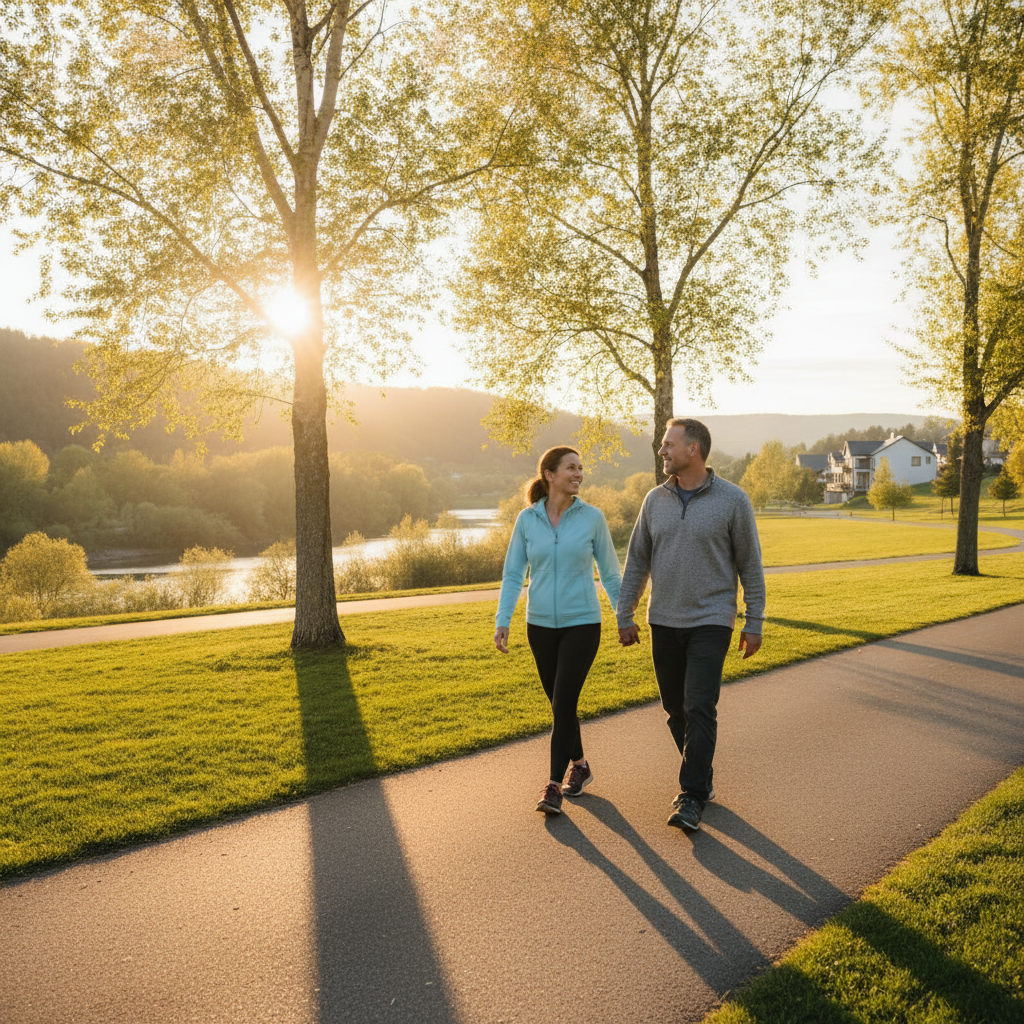
Turning this into a consistent practice doesn't require elaborate planning. If you finish dinner around seven in the evening, a ten-to-fifteen-minute walk through the neighborhood — somewhere like a tree-lined residential block, a park path, or even around a well-lit commercial strip — fits comfortably into the gap before the evening winds down. Fitness apps like Garmin Connect or Apple Fitness+ can track these short walks and log them alongside other daily movement, which helps reinforce the habit through visible progress.
Walking with a partner or listening to a podcast or audiobook makes the time enjoyable rather than obligatory. The goal isn't to break a sweat or hit a distance target — it's simply to move the body during the window when it matters most metabolically. Consistency over weeks, not intensity on any given night, is what produces lasting change.
The science around post-meal movement continues to develop, with researchers increasingly interested in how light activity can be integrated into daily life as a form of preventive metabolic care. As wearable technology becomes more sophisticated and personalized health tracking more accessible, the ability to observe these effects in real time will likely make short evening walks an even more common recommendation from clinicians working in preventive health and diabetes management. What was once an old-fashioned after-dinner ritual turns out to have a solid physiological rationale — and current research is only strengthening that case.