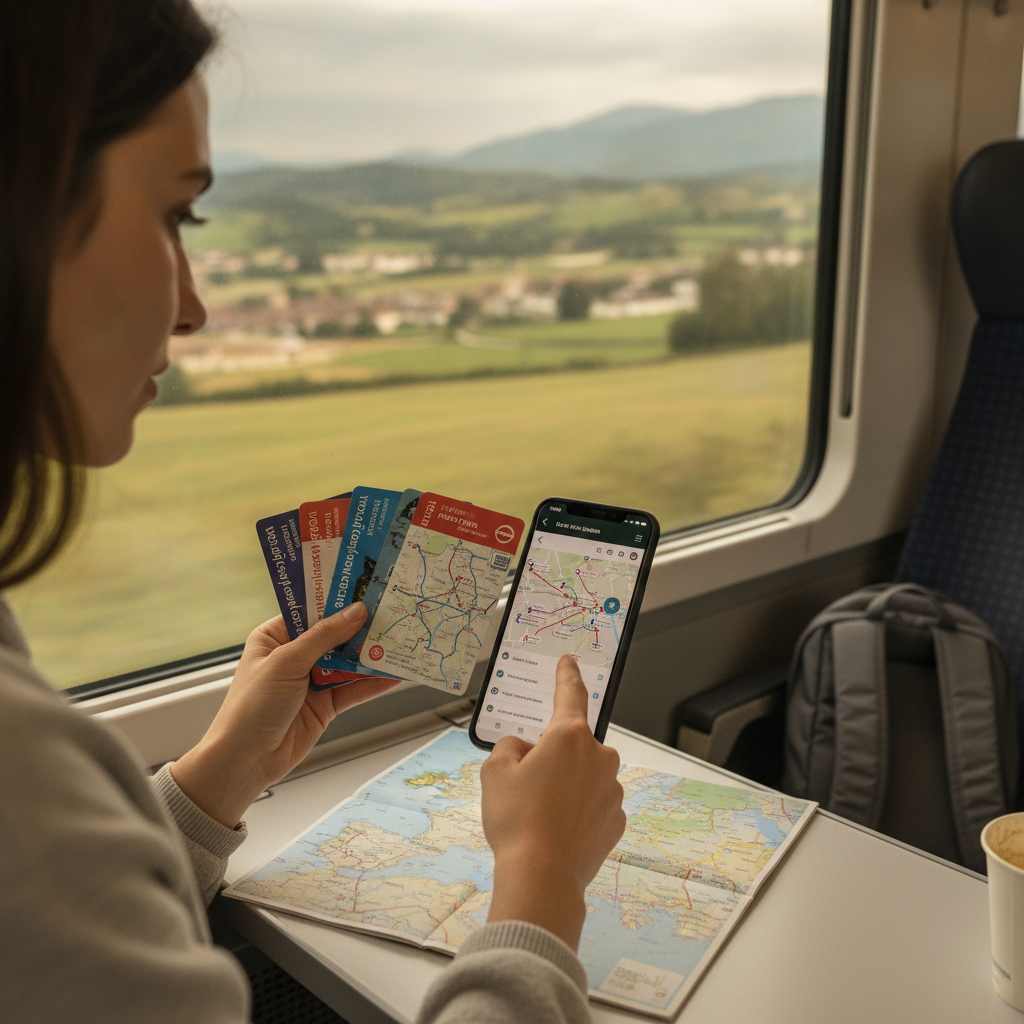
Buying a European rail pass feels like a smart move until you're sitting on a train through the Swiss Alps doing mental math and realizing you've paid for twelve travel days but only planned to use five. It's a surprisingly common situation. The marketing around passes like the Eurail Global Pass makes them sound like a golden ticket to spontaneous European adventure, and sometimes they are — but just as often, travelers overpay for flexibility they never use. Getting more value out of a rail pass isn't complicated, but it does require some upfront thinking before you book anything.
Map Out Your Actual Route Before Buying Anything
Before you commit to any pass, write down every city you actually plan to visit — not every city you'd visit in an ideal world, but the ones you have real dates for. Then price out those specific routes on the Eurail or Interrail planner alongside standard point-to-point tickets. On many popular corridors like Paris to Amsterdam or Barcelona to Madrid, advance point-to-point tickets are cheaper than the pass cost for that leg. The math only tips in favor of a pass when you're covering serious distance across multiple countries in a short window.
Understand What a Pass Actually Covers (and What It Doesn't)
One of the easiest ways to get caught off guard is assuming a rail pass covers everything. In practice, many high-speed trains — including Thalys services and some routes on Trenitalia's Frecciarossa network — require a separate reservation fee even if you hold a valid pass. Night trains often do too. These fees aren't enormous individually, but across a two-week trip they add up. Read the fine print for every train you're planning before you assume your pass handles the full cost. The Eurail website lists reservation requirements by route, and it's worth checking each one.
Choose the Right Pass Type for Your Travel Style
Eurail offers a surprisingly granular set of pass types — global passes, one-country passes, two-country regional passes, and flexible options that let you choose a set number of travel days within a longer window. If you're spending most of your time in one country with a single cross-border trip, a country-specific pass paired with one point-to-point ticket will almost always beat a global pass on price. The Eurail France Pass, for example, makes sense for someone doing an extended loop through Provence and Brittany. A global pass for that same trip is likely overkill.
Use Flexibility Days Strategically, Not Casually
Flexible passes — the kind where you have, say, ten days of travel within a two-month window — only pay off if you treat each travel day like a resource. A common mistake is using a travel day for a short regional hop that would cost very little as a standard ticket. Save your travel days for the long-haul legs: London to Edinburgh, Paris to Venice, Amsterdam to Copenhagen. For shorter trips under ninety minutes, just buy a regular ticket at the station or through the national rail app. That habit alone can make a flexible pass stretch meaningfully further.
Book High-Demand Routes Early Even With a Pass
Holding a pass doesn't guarantee you a seat. On busy routes — especially summer trains through Italy or scenic routes like the Glacier Express in Switzerland — reservations fill up weeks in advance. If you're traveling between June and September, treat reservation slots the same way you'd treat hotel availability: book as early as your itinerary is confirmed. The Glacier Express, for instance, requires advance reservation regardless of pass type, and popular departure times sell out fast. Showing up at the station hoping to board on a pass alone is a gamble that doesn't usually end well.
Factor in the Pass Activation Window Carefully
Most multi-day passes have an activation period — a window of calendar days within which your travel days must fall. A fifteen-day flexible pass might be valid within a two-month window, which sounds generous. But if you activate it on day one of a long trip and then have a slow middle stretch of museum days and beach time, those travel days can expire before you use them. Activate your pass at the point in your trip where train travel is most concentrated, not necessarily at the very start. Timing this right is one of the simplest ways to avoid paying for days that go to waste.
Compare Passes Against Budget Airline Pricing
For some routes, particularly those crossing large geographic gaps like London to Lisbon or Stockholm to Rome, a budget airline fare will undercut even the best rail pass value. Carriers like Ryanair and Vueling regularly offer fares on these longer corridors that no train pass can realistically match on price. The train experience is often better — more comfortable, city-center to city-center — but if the budget is tight and the route is long, checking flight prices takes about three minutes and can save a meaningful amount. A hybrid approach, using rail for medium-distance legs and flying the longest ones, often produces the best overall value.
Track Your Spend As You Go
Once you're traveling, keep a simple running log of what your pass has cost you versus what you'd have paid point-to-point. Apps like Rome2Rio make this easy — you can look up any route and see both the pass reservation cost and the walk-up ticket price side by side. If you're two-thirds through your trip and the pass has already paid for itself with room to spare, great. If it hasn't, adjust your remaining travel plans accordingly. Awareness of where you stand in real time keeps you from making optimistic decisions based on a pass you've already sunk money into.
Rail travel across Europe is genuinely one of the most enjoyable ways to move between places — and passes can be excellent tools when they match your actual itinerary. The key is treating a pass purchase like any other travel expense: compare it honestly, buy only what you'll use, and stay flexible enough to swap a long train for a cheap flight when the numbers make sense. As dynamic pricing becomes more common across European rail networks, the gap between strategic buyers and casual ones will only widen — which means travelers who do a little homework upfront will keep getting more for their money.