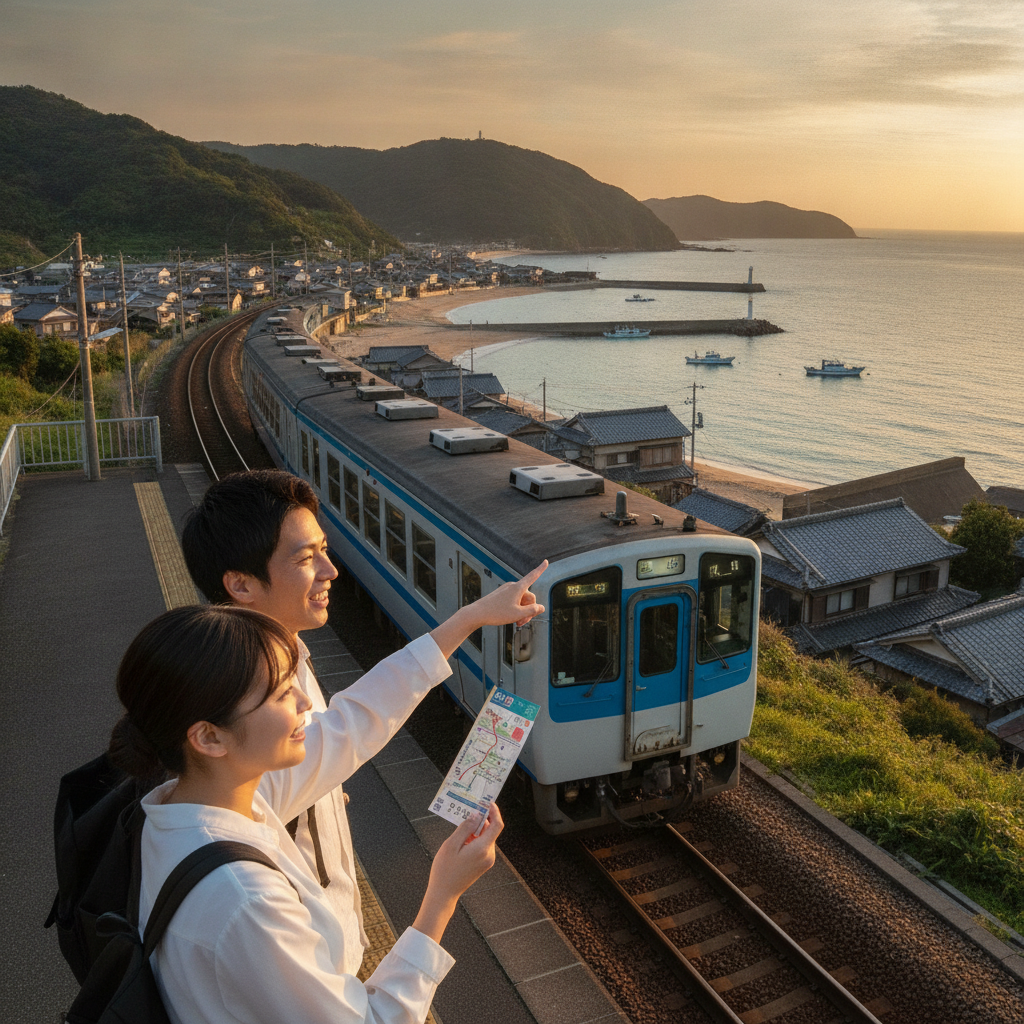
Most visitors to Japan spend their entire trip ping-ponging between Tokyo, Kyoto, Osaka, and Hiroshima — and honestly, those cities deserve the attention they get. But if you've already done the classics or you're simply craving something quieter, Japan's regional rail network opens up a completely different country: fishing villages where the catch still comes in at dawn, rocky peninsulas with no English signage, and small-town shotengai shopping streets that haven't changed much in decades. The trick is knowing which passes actually work for your route, and how to use them without paying for coverage you'll never touch.
Understand How the JR Pass Actually Fits In
The JR Pass is the most famous option, but it's designed around long-distance travel between major cities, not the kind of meandering coastal exploration that leads to genuinely memorable places. If your goal is to reach smaller towns along the Sea of Japan coast or the Kii Peninsula, the national pass may cover your shinkansen leg but leave you stranded at a regional station where the local line operates under a completely separate company. Before buying anything, map out your actual route and check which rail operators run the segments you care about most.
Look Into Area-Specific Passes First
Japan Rail Group sells several area passes that are far more practical than the national version for regional travel. The Sanin-Sanyo Area Pass covers a stretch of western Honshu that includes the Sea of Japan coastline — towns like Tottori and Hagi that appear on almost no standard itinerary. The Kyushu Rail Pass comes in different configurations depending on whether you want the full island or just the northern section. These targeted passes are typically cheaper and often include non-JR lines that the national pass simply doesn't touch, which is exactly where the interesting routes live.
Download Navitime Japan Before You Board Anything
Navitime Japan is the app that actually handles regional routing with accuracy, including local lines, fare calculations, and timetables for trains that run only a few times a day. Google Maps works reasonably well in major corridors, but it often misses transfer timing on rural lines where a ten-minute gap between a JR service and a local coastal train means waiting two hours for the next connection. Navitime also shows you whether your pass covers a given leg, which saves the awkward moment at the ticket gate when you discover it doesn't. Download it, use offline maps where available, and cross-check any pass coverage before committing to a route.
Combine Passes With IC Cards for Short Gaps
No regional pass covers every single segment, and trying to find one that does will drive you toward more expensive options that aren't worth it. The smarter move is loading a Suica or ICOCA card alongside your pass. These IC cards work on virtually every transit system in Japan, including buses, ferries, and local private lines that no pass touches. When a coastal town sits on a private railway spur that branches off the main JR line, you simply tap your IC card for that short stretch and pocket the difference. It keeps your routing flexible without locking you into a pass that overreaches.
Time Your Segments Around Infrequent Schedules
This is the part most travelers underestimate. Regional trains in rural Japan sometimes run every ninety minutes — sometimes less. A line serving the Noto Peninsula or the remote stretches of the Shimanto River valley might have four departures in an entire day. If you miss one connection, your afternoon is effectively restructured for you. Always build your day around the train schedule rather than the other way around. Pull up the timetable for your target station the night before, identify your two or three realistic departure windows, and plan backward from there. It sounds rigid, but it's actually what gives the day its shape.
Focus on Prefectures That Reward This Approach Most
Some regions repay the extra planning effort far more than others. Yamaguchi Prefecture's coastline along the Japan Sea is genuinely spectacular and almost tourist-free. The Ise-Shima area of Mie Prefecture, accessible via Kintetsu Rail passes, offers pearl diving villages and a slower version of traditional Japan that most people never see. Kochi Prefecture on Shikoku, particularly along the Shimanto River corridor, combines dramatic scenery with some of the warmest local hospitality you'll find anywhere in the country. These aren't hidden secrets — the infrastructure exists and the trains run — they just require a slightly more intentional approach than booking a seat on the Nozomi.
Ask at Regional Tourist Information Offices
Every regional JR station of any size has a tourist information counter, and the staff at these offices often know about combo passes, bus-and-rail day tickets, or seasonal discount cards that never show up in English-language travel guides. In Tottori, for example, the local tourism office can point you toward day passes that combine the sand dune area buses with coastal train segments at a significantly reduced fare. This is local knowledge that doesn't get aggregated onto travel blogs because it changes seasonally and varies by prefecture. Five minutes at the information counter can save you both money and the frustration of buying the wrong product online.
Build Rest Days Into Coastal Segments
The temptation with any rail pass is to maximize coverage — to hit as many stops as possible before it expires. Coastal towns in rural Japan tend to punish that approach. Places like Kinosaki Onsen, Amanohashidate, or the smaller fishing villages along the Sanriku coast are genuinely best absorbed slowly. A two-night stay in a small ryokan gives you time to walk the harbor at different hours, eat where locals eat, and actually notice the pace that makes these places worth the detour. If you sprint through them to collect the experience, you'll feel like you missed the point — because you will have.
Japan's regional rail network is one of the most precise and reliable systems on earth, which means the barrier to reaching places most visitors skip entirely is lower than it looks. The planning feels complicated at first, but once you understand which pass fits your actual route, download the right tools, and build your days around train schedules rather than against them, the whole thing clicks into place. The coastal towns are there, the trains reach them, and the experience of finding somewhere that doesn't feel optimized for tourism is increasingly rare anywhere in the world.