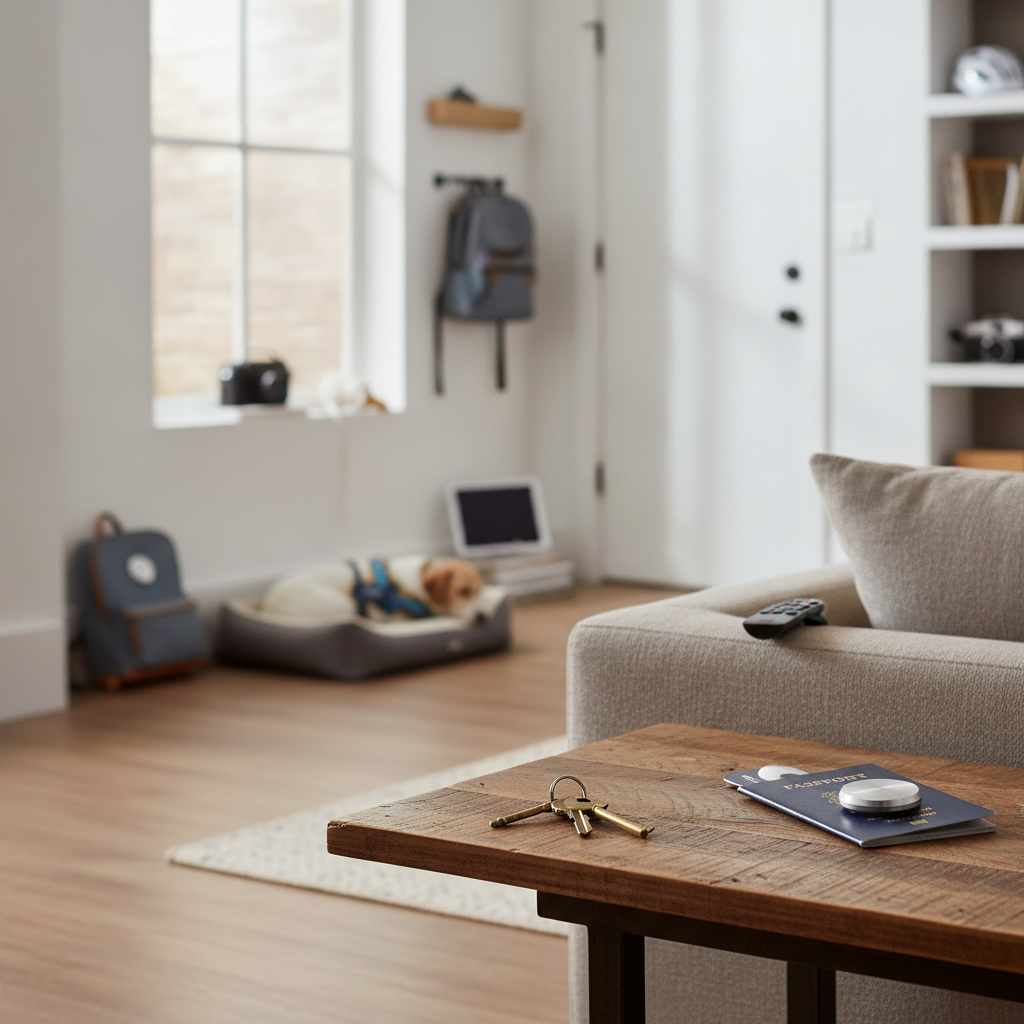
Losing things is one of those small frustrations that compounds fast. The keys that vanish before a morning commute, the bag left at a café, the remote that somehow migrates behind the couch cushion — these moments cost time, energy, and occasionally real money. Low-power Bluetooth trackers have become a quiet solution to exactly this kind of daily friction, and most people who try one wonder why they waited so long.
These small devices — think Apple AirTags, Tile trackers, or Samsung SmartTags — work by broadcasting a Bluetooth signal that other nearby devices pick up and relay anonymously to a network. The result is a live or near-live location for whatever the tracker is attached to, accessible from your phone. They run for months or even a year on a single coin cell battery, cost far less than the things they protect, and require almost zero ongoing effort once set up.
Attach One to Your Keys Before Anything Else
Keys are the single most universally lost item in daily life, which makes them the obvious starting point for anyone new to Bluetooth trackers. Slip a Tile Slim or an AirTag into a key ring, connect it to your phone once, and you're done. The next time your keys disappear, you open an app and either see their last known location on a map or trigger an audible chime that helps you zero in on them. For something that takes about five minutes to set up, the long-term payoff is genuinely hard to overstate.
Use One in Your Wallet Without Adding Bulk
Wallet trackers have gotten impressively thin over the past few years. Devices like the Tile Slim or the AirTag paired with a card-style holder sit inside a standard wallet without creating that uncomfortable bulge. This matters more than it sounds — a lost wallet often means cancelled cards, a replacement ID, and hours of administrative hassle. A tracker that pings its location the moment you realize you've left it somewhere can short-circuit all of that. Many people report recovering their wallet the same day they left it behind, usually still at the restaurant or rideshare where they forgot it.
Track Your Luggage Without Relying on the Airline
Anyone who has stood at a baggage carousel watching everyone else collect their bags understands the particular dread of delayed or misdirected luggage. Placing a tracker inside checked baggage gives you real-time visibility that airline apps rarely provide. You can confirm your bag made the connecting flight, see when it lands, and know immediately if it ends up at the wrong airport. Apple AirTags became especially popular for this use after travelers started documenting how precisely they could trace misdirected bags — sometimes right to the handling facility where it was sitting.
Protect Bikes, Scooters, and Gear Left Outside
Trackers aren't just for small items you carry — they work well for anything that gets left unattended. Tucking a tracker into a hidden compartment on a bike or scooter doesn't prevent theft, but it dramatically improves the odds of recovery if theft happens. The same logic applies to expensive camera bags, musical instruments, or sports equipment that travels with you but sometimes sits in a car or storage area. The tracker's small size makes it easy to conceal, and most designs are rugged enough to handle outdoor conditions without issue.
Keep Tabs on Kids' Backpacks and School Bags
School bags have a habit of ending up in unexpected places — a friend's house, the lost and found, the back of a bus. A small tracker attached to the inside of a child's backpack gives parents a low-effort way to confirm the bag (and presumably its owner) arrived where it was supposed to. This isn't about surveillance; it's about the practical reality that kids lose things constantly, and a quick location check from your phone is a lot faster than calling the school office. Tile and Samsung both offer family-sharing features that make this kind of setup straightforward.
Set Separation Alerts So the Tracker Finds You First
One underused feature of most Bluetooth trackers is the separation alert — a notification that fires when your phone moves beyond a certain distance from the tracker without you triggering the departure yourself. This means your phone tells you that you left your bag behind before you've even processed that something is missing. Walking out of a coffee shop without your laptop bag? You'll get a buzz on your wrist or a ping on your phone almost immediately. Setting these alerts up takes two minutes and turns the tracker from a reactive tool into a proactive one.
Mix Ecosystems Carefully to Avoid Coverage Gaps
The effectiveness of a Bluetooth tracker depends heavily on the density of other devices running the same network in your area. Apple's Find My network is enormous because almost every iPhone, iPad, and Mac participates in it anonymously, making AirTags particularly effective in cities and suburbs. Tile runs its own network with a smaller but still useful footprint. Samsung SmartTags work through the Galaxy network. If you use an Android phone, AirTags offer limited functionality, so Tile or a SmartTag usually makes more practical sense. Matching your tracker to your phone's ecosystem gets you the best coverage.
Don't Overlook the Remote or TV Clicker
This one sounds almost too mundane to mention, but remote controls are among the most frequently lost objects in any home, and several trackers are designed specifically to attach to them. Tile makes a product called the Tile Sticker — a thin adhesive tracker — that sticks directly to the back of a remote, a laptop, or any flat surface. You can also use the reverse function: press the button on most trackers to make your phone ring, even when it's on silent. The tracker becomes a two-way tool for finding both itself and your phone, which is quietly one of the most practical things about the whole category.
Bluetooth trackers occupy a small space in your pocket or bag but solve a genuinely large category of everyday frustration. They're affordable, require almost no maintenance, and start working immediately. Picking up one or two to protect the things you lose most often is a low-effort change that tends to stick — and once you've used one, you'll likely wonder what took you so long to try it.