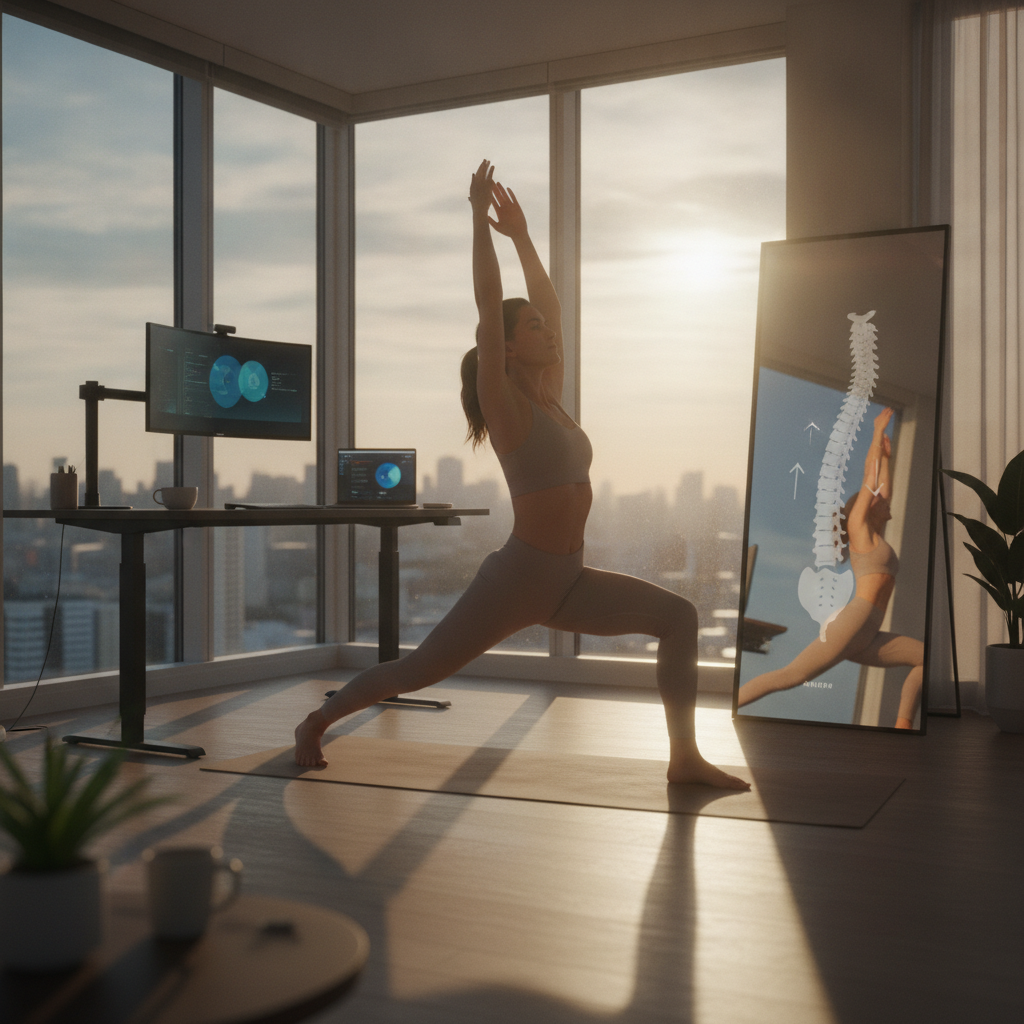
Most people treat stretching as a cooldown ritual — something you do in the last few minutes of a workout before heading to the shower. That habit is genuinely useful, but it captures only part of what your body needs to move well throughout the day. Adding a short mobility practice in the morning, before your muscles face the demands of sitting, standing, commuting, or lifting, addresses a completely different set of needs. If you've noticed tension creeping into your neck or lower back by mid-afternoon, there's a good chance your morning routine is missing something.
The Difference Between Stretching and Mobility Work
Stretching and mobility work are related but not the same thing. Stretching typically targets muscle length — holding a position to extend a tight hamstring or hip flexor. Mobility work goes a step further by combining range of motion with joint control, asking your body to move actively through positions rather than simply holding them passively. Think of hip circles, thoracic rotations, and controlled shoulder movements. Tools like the GOWOD app or routines built around Functional Range Conditioning principles emphasize this distinction, helping you build usable flexibility rather than just temporary looseness.
Why Post-Workout Stretching Alone Falls Short
After a workout, stretching helps your muscles recover and signals the nervous system to downregulate. That's valuable. But by that point, you've already moved through your entire session — and possibly several hours of sitting beforehand — without addressing how your joints and tissues were prepared to handle load. Post-workout stretching is reactive. It responds to tension that has already built up. A morning mobility practice, by contrast, is proactive. It prepares your joints and connective tissue before they're asked to do anything demanding, which means they're more resilient throughout the day.
How Morning Mobility Shifts Postural Patterns
Posture isn't just about how you sit or stand — it's a pattern your body defaults to based on habitual muscle tension and joint positions. When certain muscles are consistently tight and others are underactivated, your skeleton follows a predictable path toward rounding, slouching, or compensating. A short morning session targeting the thoracic spine, hip flexors, and shoulder girdle can interrupt those patterns before they solidify. Over weeks, this kind of practice genuinely changes how your body carries itself. Many physical therapists at clinics like ATI Physical Therapy recommend morning mobility specifically for patients dealing with chronic postural tension.
What a Practical Morning Routine Actually Looks Like
You don't need an hour or a complicated program. A focused ten to fifteen minutes covers the most impactful areas for most people. Start with a few rounds of cat-cow to wake up the spine, then move into 90/90 hip rotations to address hip flexor stiffness from sleep. Add some thoracic extension over a foam roller, a few controlled shoulder circles, and finish with a slow world's greatest stretch on each side. That sequence touches the major joints most affected by prolonged sitting and inactivity. Apps like StretchIt or the movement library within Whoop can help you build and stick with a consistent sequence.
The Role of Joint Lubrication in Morning Movement
Joints are surrounded by synovial fluid, which acts as a lubricant during movement. After hours of stillness during sleep, that fluid needs to redistribute through gentle, controlled motion before joints are ready to handle real load. This is part of why many people feel stiff in the first twenty minutes after waking — and why moving slowly and deliberately first thing produces such noticeable relief. Taking your joints through their full range of motion in the morning encourages that fluid to spread evenly, reducing friction and the minor aches that often accompany early-day activity.
Building Consistency Without Relying on Motivation
The most effective morning mobility habit is one that's easy enough to do even on low-energy days. Tying your practice to an existing anchor — like the ten minutes while your coffee brews — reduces the decision-making that kills consistency. Keeping a mat in a visible spot removes friction. Starting with just five minutes is more sustainable than committing to twenty and abandoning it by week two. Over time, the routine becomes automatic, and the benefits compound. Small, repeated inputs accumulate into meaningful changes in how your body feels and functions across the entire day.
Combining Morning and Post-Workout Work Strategically
The goal isn't to replace your post-workout stretching — it's to treat morning mobility and post-workout recovery as two distinct tools serving different purposes. Think of your morning practice as joint preparation and postural priming, while post-workout stretching handles muscle recovery and tension release after exertion. This pairing creates a more complete approach to physical wellbeing. Athletes who train at facilities like Equinox or follow structured programming from coaches often use both practices deliberately, recognizing that recovery is a full-day process, not just a five-minute cooldown.
Tracking Progress Without Obsessing Over Metrics
Mobility improvements are easy to miss because they happen gradually. One useful approach is a simple weekly check-in: notice how far you can rotate your thoracic spine, how your hips feel in a deep squat, or how naturally your shoulders sit at rest. Wearables like the Oura Ring can track resting heart rate variability and sleep quality, both of which tend to improve alongside consistent mobility work. You don't need to measure everything, but checking in occasionally helps you notice real progress and reinforces the habit when it starts to feel routine rather than purposeful.
Building a morning mobility practice doesn't require an overhaul of your existing routine — just a small shift in how you use the first quarter-hour of your day. Start with one simple sequence, do it consistently for two weeks, and pay attention to how your body feels by afternoon. That's all it takes to begin noticing the difference.