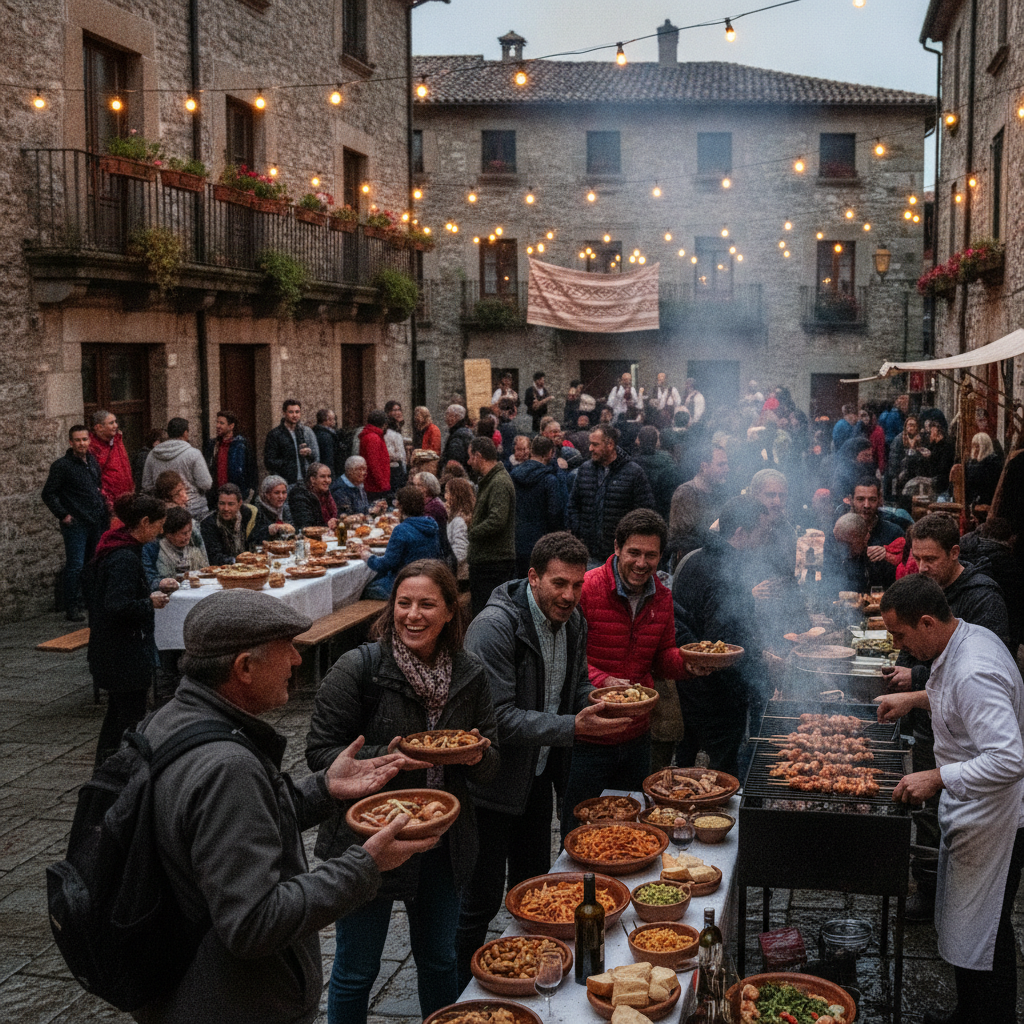
There is a particular kind of stillness that settles over a town when the summer crowds have gone home. The cafés refill with regulars, the market stalls shift from selling postcards to selling produce, and the people who actually live there begin to move through public space as though it belongs to them again — because, for a few months at least, it does. It is in these quieter windows that many of the world's most compelling food festivals take shape, drawing not international tour operators but local producers, regional chefs, and communities gathered around tables for reasons that have nothing to do with Instagram.
When the Calendar Shifts, the Culture Appears
Food festivals that fall outside the standard high-season window tend to be organized around agricultural reality rather than tourism convenience. The vendemmia season in Italy's wine regions, for instance, runs through September and October — well past the peak summer rush — and the harvest celebrations that accompany it in towns like Montalcino and Barolo are events built for participants, not spectators. Similarly, the Día de los Muertos food traditions across Oaxaca, Mexico, unfold in late October and early November, when the region is neither at its most crowded nor its most promoted, but is absolutely at its most alive with meaning. These are moments shaped by seasonal logic, by what the land is producing and what communities have gathered to honor, and the traveler who finds them is witnessing something that was never designed to be a performance.
The contrast with peak-season tourism is instructive. When a destination is operating at full visitor capacity, its food scene often adjusts to meet tourist expectations — menus simplify, portions standardize, and the staff serving visitors may have little connection to the cuisine they're presenting. The experience becomes transactional in ways that are almost impossible to avoid. Off-season food festivals interrupt that pattern because they aren't designed around visitor satisfaction at all. They exist because the community needs them to exist, and that necessity is legible in every detail, from the handwritten signage to the way locals greet each other across vendor stalls.
The Economics of Traveling in the Quiet Months
Beyond cultural texture, there are practical dimensions to off-season festival travel that compound the experience. Accommodation in cities like Bologna or Lyon during a regional food or harvest festival held in autumn will cost meaningfully less than a summer stay, and the availability of centrally located lodging — guesthouses, family-run pensioni, small hotels with actual owners on the premises — is far greater. The traveler isn't competing with twelve other people for the last available room near the old town. There's room to slow down, to return to the same trattoria twice, to spend a morning at the covered market without navigating a crowd.
This economic breathing room translates into a different quality of engagement. When the cost of a trip is lower, there's less pressure to extract maximum experiences from every hour, and paradoxically, that relaxation tends to produce richer ones. The traveler who lingers over a long lunch at a regional food festival in the Alsace wine country during its autumn fête des vendanges — a local harvest celebration — is not checking off an attraction. They're participating in a rhythm that the place has maintained for generations, and the affordability of the off-season is what makes that kind of unhurried presence possible.
What Locals Share When They Have Time to Share It
One of the subtler gifts of off-season food festival travel is the quality of human exchange it makes possible. Vendors, chefs, and producers who would be managing long queues during a summer high season have time, during the quieter months, to actually speak. The woman selling aged cheese at a festival in the Basque Country's autumn cider season — the sagardoaren garaia, a period when cider houses reopen and communal meals are served in traditional txotx style — may spend twenty minutes explaining the difference between varieties, not because she's performing hospitality for a tourist, but because the conversation is genuinely interesting to her. These exchanges are the texture that makes travel memorable rather than merely pleasant.
For this reason, off-season food festival circuits reward a particular kind of traveler: one who is willing to do a small amount of research before arriving and to approach unfamiliar cultural events with patience rather than efficiency. Apps like Google Translate have made language barriers far more navigable than they once were, and in most cases a local tourist board or regional food council will publish seasonal event calendars that are accessible even to international visitors. The information is there; finding it simply requires looking slightly outside the standard travel-planning infrastructure.
Letting the Off-Season Reframe What Travel Is For
If you are planning a trip and find yourself drawn to a destination's food culture — not just its restaurant scene, but the way a region actually eats and celebrates — then building the itinerary around an off-season festival calendar is worth serious consideration. Look for harvest festivals, regional produce events, cider and wine celebrations, winter food markets, and local feast days that fall outside the June-through-August window. The Truffle Fair in Alba, Italy, runs through autumn. The Bordeaux wine harvest festivals spill into September and October. Vietnam's regional food festivals tied to the lunar calendar create windows of cultural intensity throughout the year that have nothing to do with Western tourism seasons.
What this kind of planning offers isn't simply a cheaper or less crowded version of the standard trip. It offers a fundamentally different relationship to the place — one in which the traveler is a guest at something that would be happening anyway, rather than a customer for an experience that was assembled in their honor. That distinction, subtle as it sounds, changes everything about how a destination feels and what it gives back.
The stillness that greets a traveler arriving in the quiet months isn't emptiness. It's the sound of a place being itself — and the food festivals that unfold within it are, perhaps, its most honest and nourishing expression.