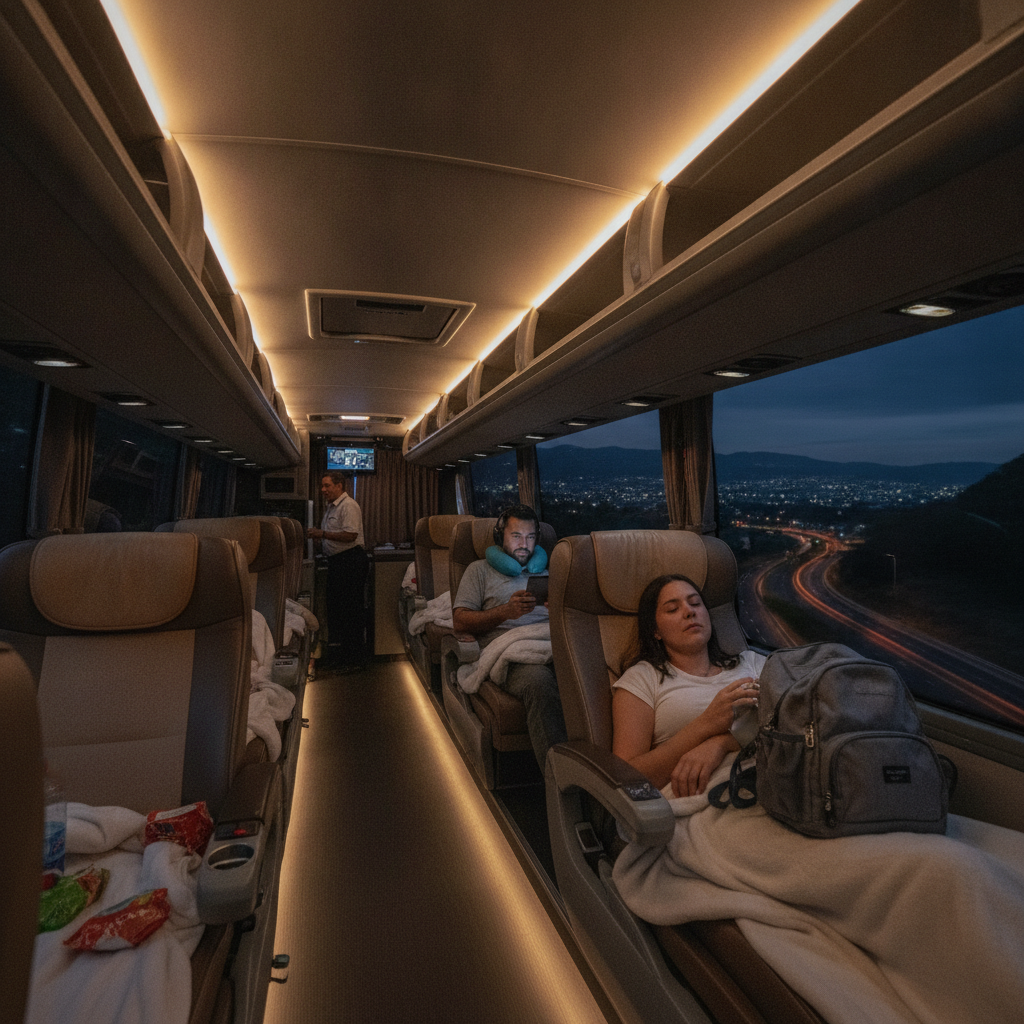
Crossing a border by bus in Central America at two in the morning, with a backpack wedged under your feet and a window fogging from the highland chill, is one of those travel experiences that sounds rough in theory but works beautifully in practice when you know what you're doing. Overnight buses across Guatemala, Honduras, Belize, Nicaragua, and beyond are genuinely one of the smartest tools a budget traveler can use — they move you between cities while you sleep, cut a night of accommodation off your budget, and drop you somewhere new by morning. Getting it right takes a little planning, but the payoff is real.
Book Through a Known Shuttle or Line, Not Random Vendors
When you're standing in a busy market in Antigua or on the main strip in San Pedro Sula, there's no shortage of people offering you a bus ticket. The problem is that informal resellers don't always guarantee the operator or the seat. Booking directly through established companies like Tica Bus, Hedman Alas, or King Quality gives you a paper trail, an actual reservation, and a seat on a vetted vehicle. These operators run intercity and cross-border routes across most of Central America and have reputations to protect. That matters more than you'd think when you're handing over your passport at a midnight border crossing.
Choose First-Class Night Coaches Over Local Chicken Buses for Long Hauls
Local buses — often called chicken buses in Guatemala and Honduras — are the cheapest option on any route, and they're genuinely charming for short day hops. For overnight travel covering four or more hours, though, a first-class coach is worth the price difference. Seats recline significantly, there's usually climate control, and the driver is doing one assigned route rather than stopping at every village along the way. The cost gap between local and first-class overnight travel is often smaller than you'd expect, usually the equivalent of a cheap street meal. Spending a bit more to actually sleep is the smart move.
Time Your Departure to Work With Border Crossing Hours
Border crossings in Central America don't run the same hours as your home country's checkpoints. Some close at ten at night; others stay open around the clock but slow to a crawl after midnight when staffing drops. When booking overnight routes that cross into a new country, check whether your specific border post — like El Florido, Peñas Blancas, or Agua Caliente — stays open for your scheduled crossing time. Reputable operators account for this in their routing, but it's worth confirming. An unexpected wait at a darkened border can stretch a six-hour journey into ten, and knowing in advance lets you pack snacks and patience accordingly.
Secure Your Gear Before You Sleep
Sleeping on any overnight transport means you're temporarily off your guard, and that's worth preparing for rather than worrying about. A basic luggage lock on your main bag, combined with storing valuables in a small pouch worn against your body, is usually enough. Stow your large bag in the compartment above your head rather than under the bus if you have the option — it stays visible that way. Don't hang your daypack on the seat hook in front of you while you sleep; tuck it between your feet instead. These habits take about thirty seconds to build and remove most of the risk without requiring you to be anxious all night.
Use Apps Like Rome2rio and Busbud to Map Your Route Before You Go
Planning overnight routes in Central America used to mean asking hostel staff and hoping the information was current. Rome2rio and Busbud have changed that significantly — both let you enter a start and end city and see a range of transport options with rough pricing and estimated travel times. They're not always perfectly up to date on schedules, but they give you a solid starting framework to confirm with operators directly. Using these tools before you arrive means you're not making rushed decisions at a bus terminal with limited time and limited Spanish. Building your route at a hostel table with Wi-Fi is almost always better than figuring it out on the fly.
Pack a Comfort Kit That Fits in a Small Pouch
The difference between arriving rested and arriving wrecked often comes down to a few small items. A lightweight inflatable neck pillow, a sleep mask, and a pair of foam earplugs weigh almost nothing and dramatically improve sleep quality on a moving bus. Central American highland nights can get genuinely cold, especially in Guatemala's western highlands or the mountains between Tegucigalpa and Managua, so a thin packable layer you can pull out at midnight is worth the space. Noise-canceling earbuds are optional but excellent if you already own them. Think of this kit as the hotel amenities you carry with you — it turns a functional experience into a genuinely comfortable one.
Learn the Basics of Cross-Border Paperwork in Advance
Crossing from Guatemala into Honduras or from Nicaragua into Costa Rica involves real paperwork, and doing it at two in the morning while half-asleep is not ideal for discovering you're missing something. Most Central American crossings require a valid passport with at least six months of remaining validity, a departure tax paid in local currency at some borders, and occasionally proof of onward travel. The CA-4 agreement between Guatemala, Honduras, El Salvador, and Nicaragua means these four countries share a ninety-day visa window — crossing between them doesn't reset your clock. Knowing this before your trip prevents genuine problems and makes the overnight border crossing feel like a minor administrative stop rather than a stressful unknown.
Arrive at the Terminal Early and Confirm Your Seat Exists
Overnights buses in Central America don't always operate on the Western concept of a guaranteed reservation. Terminals can be chaotic, printed tickets occasionally don't match the manifest, and double-booking happens more than you'd hope with smaller operators. Arriving thirty to forty-five minutes early gives you time to confirm your name is on the list, identify your bus, and claim your overhead space before it fills with other people's duffel bags. It also gives you a moment to assess the vehicle — if the tires look questionable or the driver seems to be having a rough evening, that's information you can act on before you're committed to eight hours on a dark mountain highway.
Overnight buses across Central America are genuinely one of the best tools in a budget traveler's toolkit — practical, affordable, and surprisingly effective when you approach them with a little preparation. Booking through established operators like Tica Bus or Hedman Alas, understanding border crossing logistics, securing your gear, and packing a basic comfort kit are all it takes to turn what sounds like an ordeal into a genuinely efficient way to move through a region that rewards the traveler willing to go a little deeper. You'll save money, cover serious ground, and wake up somewhere new — which is really the whole point.