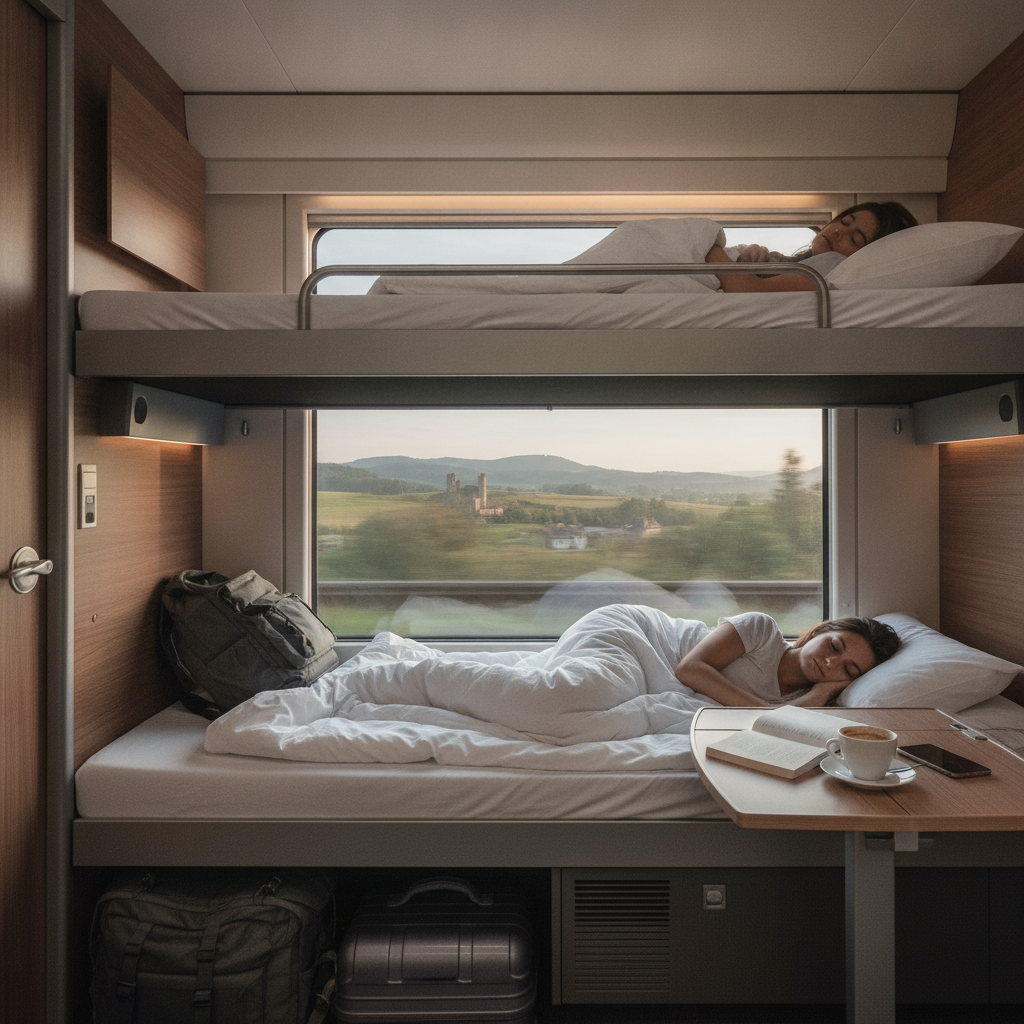
There's a particular kind of travel math that just works. You close your eyes somewhere in Austria, and you open them in Italy. No hotel check-in, no wasted morning, no taxi to the airport at 4 a.m. Overnight trains across Europe have been doing this quietly for decades, and for budget-conscious travelers willing to embrace a little adventure, they remain one of the smartest moves on the continent. The trick is knowing how to use them properly — because done right, they save you real money while adding something no budget airline ever could.
Book Your Couchette or Sleeper Early
Europe's overnight train network has expanded significantly in recent years, with operators like Nightjet and the revived European Sleeper running popular corridors. Availability on sleeper compartments fills fast, especially during summer. A standard couchette — a fold-down bunk in a shared compartment — tends to be the sweet spot between price and comfort. Private sleeper cabins with actual beds exist too, and while they cost more, they're still often cheaper than a decent hotel room. Book through Rail Europe or directly with national rail operators at least four to six weeks ahead for the best fares.
Understand What Your Ticket Actually Includes
Overnight train pricing can feel confusing until you break it down. Your fare typically covers the seat or berth, and sometimes a basic breakfast is included with sleeper cabins — Nightjet routes often throw in a small meal package. What you're really paying for is transportation plus accommodation bundled into one cost. Compare that against a budget flight plus a hostel bed plus transfers, and the overnight train frequently wins on total spend. Always check what the specific booking includes before assuming anything; couchette fares and sleeper fares are meaningfully different products.
Choose Your Route Based on Journey Length
Not every overnight train makes sense for every route. The sweet spot is a journey of roughly six to nine hours — long enough to actually sleep through, short enough to arrive at a reasonable morning hour. Routes like Vienna to Venice, Paris to Madrid, or Amsterdam to Berlin hit that range well. Anything under five hours might leave you arriving at 2 a.m. with nowhere to go, while very long routes across multiple countries can mean disrupted sleep from multiple border checks. Match the route to the time window, and the experience becomes genuinely restful rather than just economical.
Pack a Sleep Kit and Treat It Like a Hotel Night
The travelers who struggle on overnight trains are usually the ones who treat it like a long bus ride. Bring an eye mask, earplugs, and a light layer even in summer — train compartments can get cold overnight. A small toiletry bag with a toothbrush lets you feel human when you arrive. Couchettes provide a blanket and pillow on most routes, though the pillow situation varies. Storing your main bag in the luggage rack and keeping a small personal bag with overnight essentials close to you makes the whole experience much smoother. Think of it as a moving hotel room with a good view at dawn.
Use a Rail Pass Strategically, Not Automatically
Interrail and Eurail passes can make overnight trains significantly cheaper, but only if your trip involves multiple legs across different countries. A pass doesn't automatically cover the sleeper or couchette reservation fee — that's a separate add-on, typically modest in cost. If you're doing one or two overnight routes on an otherwise flexible trip, buying point-to-point tickets is often cheaper than investing in a full pass. Run the numbers before committing. Rail passes shine on dense multi-country itineraries; they're less efficient when most of your travel is within a single country or region.
Arrive at the Station With Time to Spare
Overnight trains board and depart with less chaos than airports, but they do run on strict schedules. Missing your train isn't like missing a metro — you've lost your sleeper reservation and potentially your whole next-day plan. Arrive at least 20 to 30 minutes early, locate your car number on the platform boards, and find your specific compartment before settling in. Train staff are generally helpful, but platforms at large stations like Gare de Lyon in Paris or Wien Hauptbahnhof can be long and busy. Getting settled early also means you can stow your luggage properly and claim your bunk without fumbling in the dark.
Combine Overnight Legs With Daytime Exploration
The real power of overnight trains isn't just what you save — it's what you gain back in daylight hours. Arriving in Prague or Zurich at 7 a.m. gives you a full day to explore before most hotel guests have even finished breakfast. Pair overnight legs with daytime regional trains or even a leisurely afternoon in a smaller town, and your itinerary becomes surprisingly efficient without feeling rushed. This approach lets you cover a lot of ground across a two-week trip without sacrificing the slow, unhurried pace that makes travel feel worthwhile rather than exhausting.
Keep an Eye on Europe's Expanding Night Train Network
The overnight train landscape across Europe is genuinely growing. New routes continue to be announced — connections between cities that previously had no sleeper option are being added or restored, driven by a combination of traveler demand and environmental awareness around short-haul flying. Operators like Nightjet are investing in newer rolling stock, and services from organizations like European Sleeper are introducing cross-border options that didn't exist a few years ago. Staying aware of route expansions means your future trips have even more options to work with, whether you're planning a budget-focused adventure or simply looking for a more grounded way to move between cities.
Overnight trains reward travelers who plan a little ahead and approach them with the right mindset. They're not perfect — they're not always as quiet as you'd like, and the odd delay happens — but the combination of forward momentum, genuine rest, and money saved on accommodation makes them one of the most satisfying tools in a European traveler's toolkit. Give one a try on your next trip, and the experience tends to speak for itself.