Packing for a destination where the weather refuses to cooperate is one of travel's most reliable headaches. You want to be prepared for rain, sunshine, and everything in between — but you also don't want to haul a bag so heavy that the airline gate agent starts eyeing it suspiciously. The good news is that smart packing for variable climates isn't about bringing more. It's about bringing smarter, with a clear system guiding every choice you make.
Start With the Weather Range, Not the Weather Forecast
Before you add a single item to your list, spend ten minutes researching the actual temperature range and precipitation patterns for your destination during the dates you'll be there. Apps like Weather Underground give you historical data alongside current forecasts, which is far more useful than a seven-day prediction when you're heading somewhere genuinely unpredictable. Once you know the spread — say, 50°F nights and 75°F afternoons with afternoon showers common — you can build your list around that range instead of guessing. This one step prevents most overpacking mistakes.
Choose a Layering System Over Individual Outfit Planning
The biggest packing mistake people make for mixed-weather destinations is planning full outfits for every scenario. Instead, build a layering system with three zones: a moisture-wicking base layer, a versatile mid-layer like a lightweight merino wool pullover, and a packable outer shell that handles wind and light rain. Brands like Uniqlo and Patagonia make packable options that compress to the size of a water bottle. Three pieces replace what might otherwise be six or seven heavier items, and they work together across dozens of temperature combinations without taking over your bag.
Pick Fabrics That Handle Multiple Conditions
Fabric choice does a lot of the heavy lifting in a compact packing list. Merino wool is the gold standard — it regulates temperature, resists odor, and dries quickly enough to wash at a hostel sink and wear the next morning. A single merino t-shirt can function as a base layer in cold weather or a standalone top in warmer conditions. Similarly, a pair of lightweight, quick-dry pants — something like those from Bluffworks or similar travel-focused brands — can go from a mountain trail to a casual dinner without looking out of place. Fewer items with broader functionality equals a lighter bag every time.
Limit Shoes to a Maximum of Two Pairs
Shoes are the fastest way to blow past carry-on limits. Two pairs should cover nearly any itinerary: one versatile walking shoe or sneaker that handles urban days comfortably, and one pair that works for rain or rougher terrain if your destination calls for it. Wear the bulkier pair on travel days to save bag space. If your destination includes occasional formal settings, a sleek leather sneaker like those from Thursday Boot Co. can bridge the gap between casual and dressy without adding a third pair. Leave the dedicated flip-flops, hiking boots, and dress shoes at home unless one of them genuinely replaces another.
Pack Accessories That Double as Problem-Solvers
A lightweight scarf is one of the most underrated packing tools for unpredictable climates. Worn around the neck on a cool evening, draped over the shoulders in an air-conditioned restaurant, or pulled up against dust and wind, it adapts to conditions without taking up meaningful space. A compact umbrella or a poncho that folds into a small pouch handles sudden rain without requiring you to carry a full rain jacket everywhere. A buff or neck gaiter serves similar layering purposes. These small items solve real problems without adding the weight or bulk of larger gear.
Apply a One-In-One-Out Rule While You Pack
Once your initial list is written, do a second pass with a strict rule: for every item you're keeping, confirm it serves at least two purposes or conditions. If something only works in one specific weather scenario and can't be layered or repurposed, it's a candidate to cut. This isn't about being minimal for minimalism's sake — it's about making sure every item earns its place in a limited-space bag. Packing cubes from brands like Eagle Creek help visually contain what you've chosen and make it obvious when things are getting crowded.
Use Your Personal Item Strategically
Most airlines allow a personal item alongside a carry-on, and this second bag is worth treating as a serious extension of your packing system, not just a place for your laptop and snacks. A structured tote or a small daypack can carry the items you'll access most during travel — your packable layer, a water bottle, and a compact umbrella — while keeping your main bag organized and consistent. This also means your carry-on doesn't get shuffled every time you want something at your seat. A well-used personal item can absorb the overflow from a tightly packed carry-on without checking a bag.
Do a Trial Run the Night Before You Leave
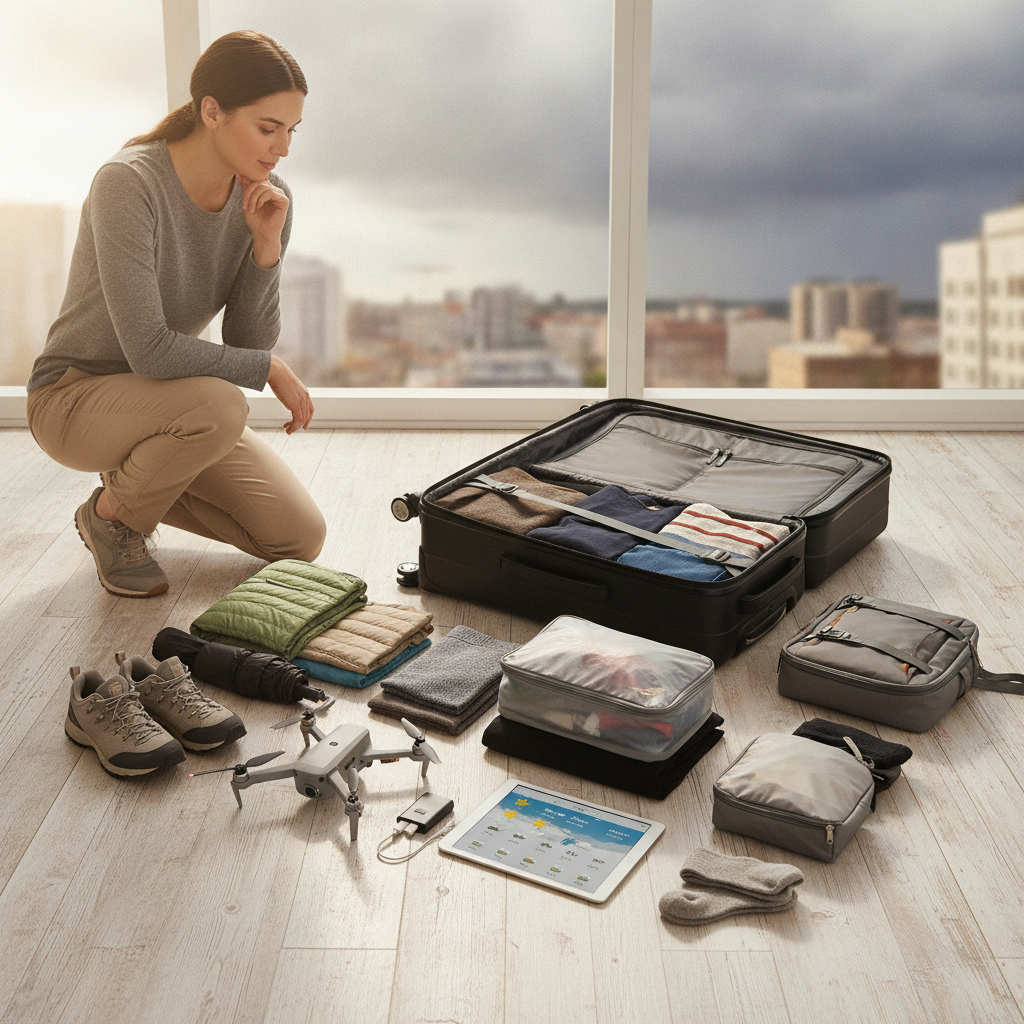
Packing everything once and then unpacking and repacking is one of the most practical habits frequent travelers develop. On your first attempt, lay everything out, then pack it into the bag and actually try to close it. If it's overstuffed or you're sitting on the zipper, something has to go. This trial run also reveals items you forgot — the phone charger left on the nightstand, the small umbrella still by the door. Doing it the night before rather than the morning of your flight gives you time to rethink without pressure. One calm repacking session beats a frantic scramble at the airport every time.
Building a solid packing list for unpredictable weather is really just a system problem, and once you have the right system, it gets easier every trip. Start with the weather range, build around layers and versatile fabrics, and ruthlessly protect your space. The carry-on that rolls smoothly into the overhead bin — no checking fees, no waiting at baggage claim — is completely within reach.