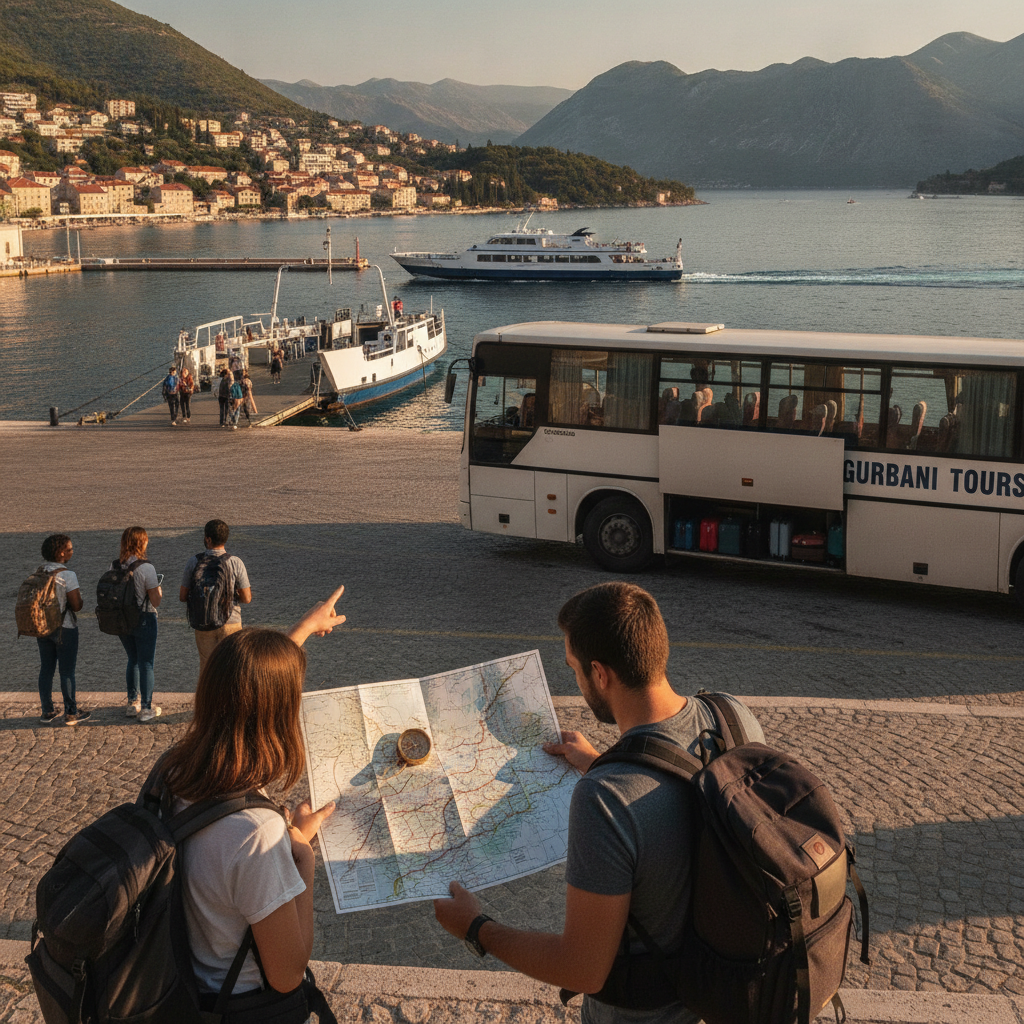
The Balkans reward slow travelers more generously than almost any other region in Europe. The countries are compact, the scenery is dramatic, and the overland connections between major destinations are genuinely good — often better than first-time visitors expect. If you're planning your first trip through this part of the world and assuming you'll need to fly between every stop, you can let that idea go. Buses, ferries, and the occasional train will get you where you want to go, often cheaper and with far more character than any short-hop flight.
Sketch Your Route Before Buying Anything
Before you look at a single ticket price, draw out a rough geographic arc through the countries you want to visit. The Balkans stretch from Slovenia in the northwest down through Croatia, Bosnia and Herzegovina, Montenegro, Albania, North Macedonia, and into Greece and Bulgaria. Trying to zigzag between non-adjacent countries adds cost and time. A logical corridor — say, Dubrovnik to Kotor to Shkodër to Tirana — flows naturally and uses direct bus connections that run daily. Mapping your route geographically first prevents backtracking and makes the overland logistics much cleaner.
Use FlixBus and Local Carriers Together
FlixBus covers several Balkan entry points, especially from Western Europe into Slovenia and Croatia, but it doesn't serve every leg you'll need. For routes deeper into the region — Sarajevo to Mostar, Podgorica to Shkodër, or Ohrid to Skopje — you'll rely on local carriers like Globtour or Autoprevoz. These tickets are often sold at bus stations in cash rather than through apps, so budget a little extra time when you first arrive somewhere new. Booking a day in advance is usually plenty on most routes; only peak summer routes between coastal towns require more lead time.
Take the Kotor to Shkodër Bus as Your Backbone
If you're moving from Montenegro into Albania, the shared minibus connecting Kotor (or Budva) to Shkodër is one of the most useful and underrated connections in the region. It runs daily, costs very little, and drops you in northern Albania ready to continue south toward Tirana. Shkodër itself is worth a half-day stop — the old bazaar and Rozafa Castle make it more than just a transit hub. From Tirana, onward buses to North Macedonia or Greece are easy to find. This single corridor gives your itinerary a natural, satisfying shape without a single flight segment.
Book Ferries Along the Dalmatian Coast Early in Summer
Croatia's ferry network, operated primarily by Jadrolinija, connects Split, Hvar, Korčula, and Dubrovnik with reliable frequency. In shoulder season — April through May or September into October — you can often walk on without a reservation. In July and August, especially on car ferries, booking ahead matters. Passenger-only tickets are cheaper and easier to get last-minute, so if you're traveling without a vehicle, your flexibility improves considerably. The Split to Hvar crossing is under an hour and costs very little; the overnight ferry from Split south toward Dubrovnik is a budget-friendly way to cover ground while skipping a night of accommodation costs.
Cross Borders Early in the Day
Border crossings in the Balkans can be quick or they can take an hour — it depends on traffic, staffing, and the season. Scheduling buses that cross a border in the morning significantly reduces the chance of long queues, since most travelers depart midday or afternoon. The Bosnia-Croatia border near Neum is one of the busiest and slowest during summer months, and the same goes for the Montenegro-Albania crossing at Sukobin. Arriving at a border crossing before 9 a.m. is often the difference between a smooth thirty-minute process and a frustrating two-hour wait on the side of a mountain road.
Use Rome2rio to Check Connections, Then Verify Locally
Rome2rio is a useful starting point for understanding what connections exist between any two cities in the region. It aggregates bus, ferry, and train options in a readable format, which helps when you're trying to figure out if a particular route is even feasible. That said, timetables and prices in the Balkans can change seasonally, and local station information is more reliable than any app for confirming exact departure times. Use Rome2rio to plan, then confirm details with the bus station in person or through a quick message to your accommodation — most guesthouses know the local schedules better than any website.
Build In Rest Days at Transport Hubs
Ohrid in North Macedonia, Mostar in Bosnia, and Kotor in Montenegro all function as natural waypoints where multiple bus routes converge. Rather than treating these as one-night stops before moving on, giving yourself two or three nights at each creates breathing room in your schedule and reduces the exhaustion that comes from moving every day. Mostar's old town warrants more than a rushed afternoon, and Ohrid's lake and Byzantine churches deserve a slow morning walk without a bag check deadline looming. Rest days also give you a buffer if a bus is full, a ferry is delayed, or you simply decide you'd rather stay longer.
Keep Cash in Multiple Currencies
Not every Balkan country uses the euro, and several bus and ferry ticket offices don't accept cards at all. Croatia uses the euro, Albania uses the lek, Bosnia uses the convertible mark, and North Macedonia uses the denar. Carrying small amounts of each currency as you cross borders prevents the frustrating situation of arriving at a bus station with no way to buy your ticket. ATMs are available in most towns of any size, but rural border areas and small ferry terminals often have none. Withdrawing local currency on arrival in each country, rather than relying on card payments throughout, keeps the logistics simple.
Planning a Balkans trip around ground transport rather than flights isn't a compromise — it's genuinely the better way to experience a region that reveals itself slowly, between the stops as much as at them. The buses wind through mountain passes, the ferries hug coastlines, and the borders crossed on foot tell you something about where you are that no airport terminal ever could. Start with one corridor, one ferry crossing, one overland leg you're excited about — and build outward from there.