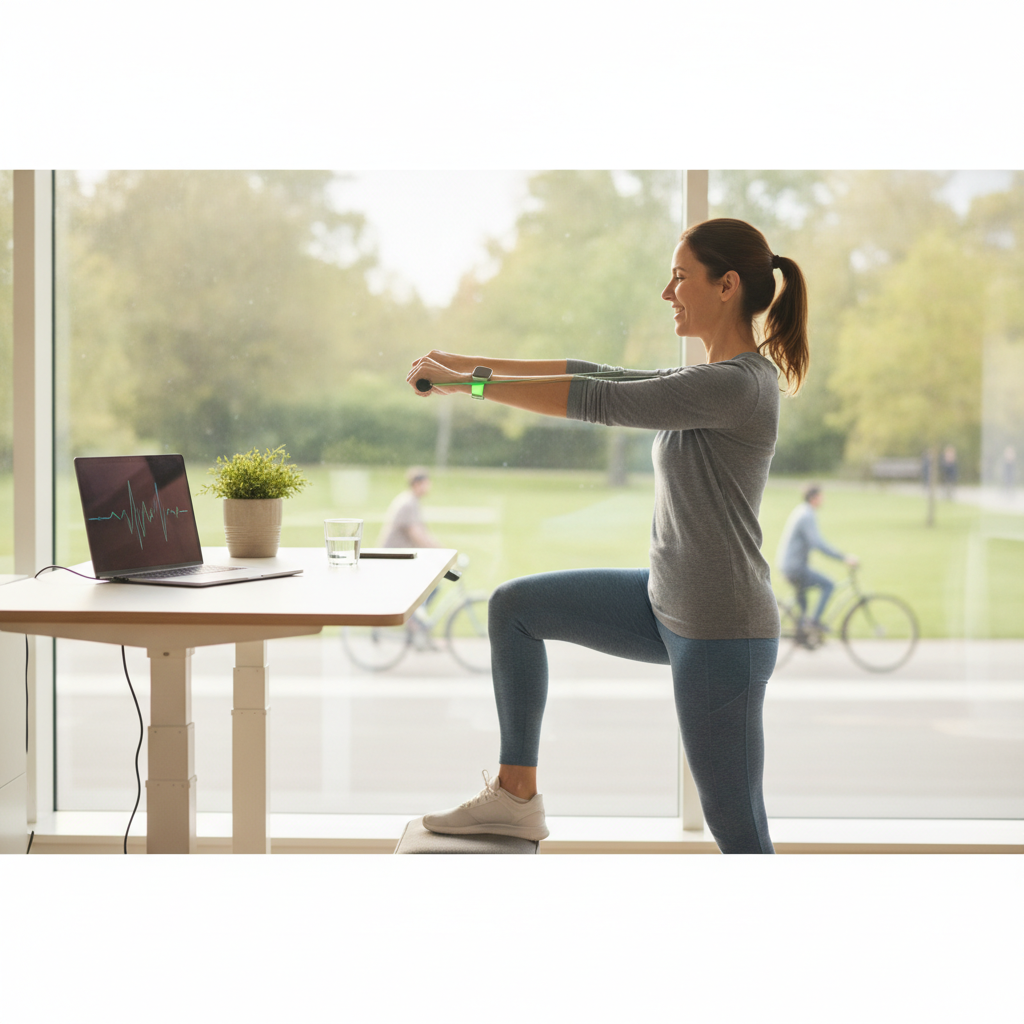
Sedentary behavior has become one of the most quietly consequential health patterns of modern life, and its effects on the heart accumulate far more steadily than most people realize. The average adult now spends the majority of waking hours seated — at desks, in cars, on sofas — and research consistently links prolonged inactivity to elevated blood pressure, worsening cholesterol profiles, and higher rates of cardiovascular disease. What makes this particularly striking is that the solution doesn't require a gym membership or athletic ambition. Replacing a single hour of sitting each day with light movement — a walk, some gentle stretching, a slow bike ride — appears to shift cardiovascular risk in measurable ways over a period as short as six months.
The Physiology of Sitting Too Long
When the body remains still for extended periods, several interconnected systems begin to underperform in ways that matter to heart health. Blood pools in the lower extremities, reducing circulation efficiency. Insulin sensitivity drops, meaning the body becomes less effective at managing blood sugar — a key factor in cardiovascular risk. Lipoprotein lipase, an enzyme critical for processing fats in the bloodstream, becomes significantly less active during prolonged sitting. Over days and weeks, these small metabolic disruptions compound into patterns that elevate triglycerides, reduce HDL cholesterol, and contribute to the kind of low-grade inflammation that cardiologists increasingly associate with long-term arterial damage. None of this is dramatic in the short term, which is precisely why it tends to go unaddressed.
What Light Movement Means in Practice
Light movement sits at the lower end of the physical activity spectrum — it's not aerobic exercise in the traditional sense, and it doesn't require elevated heart rate or heavy breathing to count. Walking at a comfortable pace, doing household tasks, gentle yoga, or even standing and moving around an office qualify as light-intensity activity. Apps like Garmin Connect and Apple Fitness+ now categorize these movement patterns separately from moderate and vigorous exercise, reflecting a growing recognition that even low-effort activity has independent health value. The key distinction from structured workouts is accessibility: light movement can be layered into nearly any schedule without preparation, equipment, or recovery time, making it a realistic daily practice for people who wouldn't describe themselves as exercisers.
How the Cardiovascular System Responds Over Six Months
Six months is a meaningful window for observing cardiovascular adaptation, and the changes that emerge from consistent light movement during that period are both real and clinically relevant. Blood pressure tends to trend downward, particularly in people who began with readings in the pre-hypertensive range. Resting heart rate, a reliable proxy for cardiac efficiency, often decreases modestly as the heart becomes better conditioned to daily demands. Cholesterol profiles shift gradually, with LDL levels declining and HDL rising in many cases — changes that mirror, in milder form, what more vigorous exercise produces. Endothelial function, meaning the ability of blood vessel walls to dilate and regulate blood flow, also improves with sustained light activity, which matters because endothelial dysfunction is one of the earliest markers of cardiovascular disease development.
The Role of Consistency Over Intensity
One of the more counterintuitive findings in preventive cardiology is that consistency of movement matters as much as its intensity for reducing long-term cardiovascular risk. A person who walks for thirty minutes every day tends to show better inflammatory markers and more stable blood pressure than someone who does an intense workout twice a week and sits for the remainder. This is partly because frequent, low-intensity movement keeps metabolic processes — particularly fat metabolism and insulin signaling — in a more active state throughout the day rather than spiking and returning to baseline. Wearables from companies like Fitbit and Whoop have made it easier to track this kind of cumulative daily movement, and data from those platforms consistently shows that users who reduce long sitting streaks experience improvements in resting metrics even when their total weekly exercise volume doesn't change dramatically.
What You Can Realistically Expect After Six Months
If you've been largely sedentary and begin replacing one hour of sitting with light daily movement, the changes won't arrive all at once — but they will arrive. In the first few weeks, the most noticeable effects tend to be improved energy levels and reduced afternoon fatigue, which reflects better blood sugar regulation throughout the day. By the two-to-three-month mark, resting heart rate and blood pressure often begin shifting in a favorable direction, particularly if the movement is consistent rather than sporadic. At the six-month point, the cumulative cardiovascular benefit becomes more substantial: arterial flexibility typically improves, inflammatory markers like C-reactive protein trend lower, and the metabolic conditions that set the stage for heart disease become measurably less pronounced. Apps like MyFitnessPal or a simple walking journal can help you track this arc and notice patterns that keep motivation grounded in real progress rather than abstract goals. The change isn't transformation — it's recalibration, and that may be exactly what the cardiovascular system needs.
The relationship between stillness and heart health has always been more reciprocal than it appears on the surface. Movement, even at its gentlest, speaks a language the cardiovascular system understands — and responds to. Replacing an hour of sitting with a slow walk or a stretch session isn't a dramatic intervention, but over six months of daily practice, it reshapes the biological environment in which the heart operates. That quiet consistency, it turns out, carries more weight than most people give it credit for.