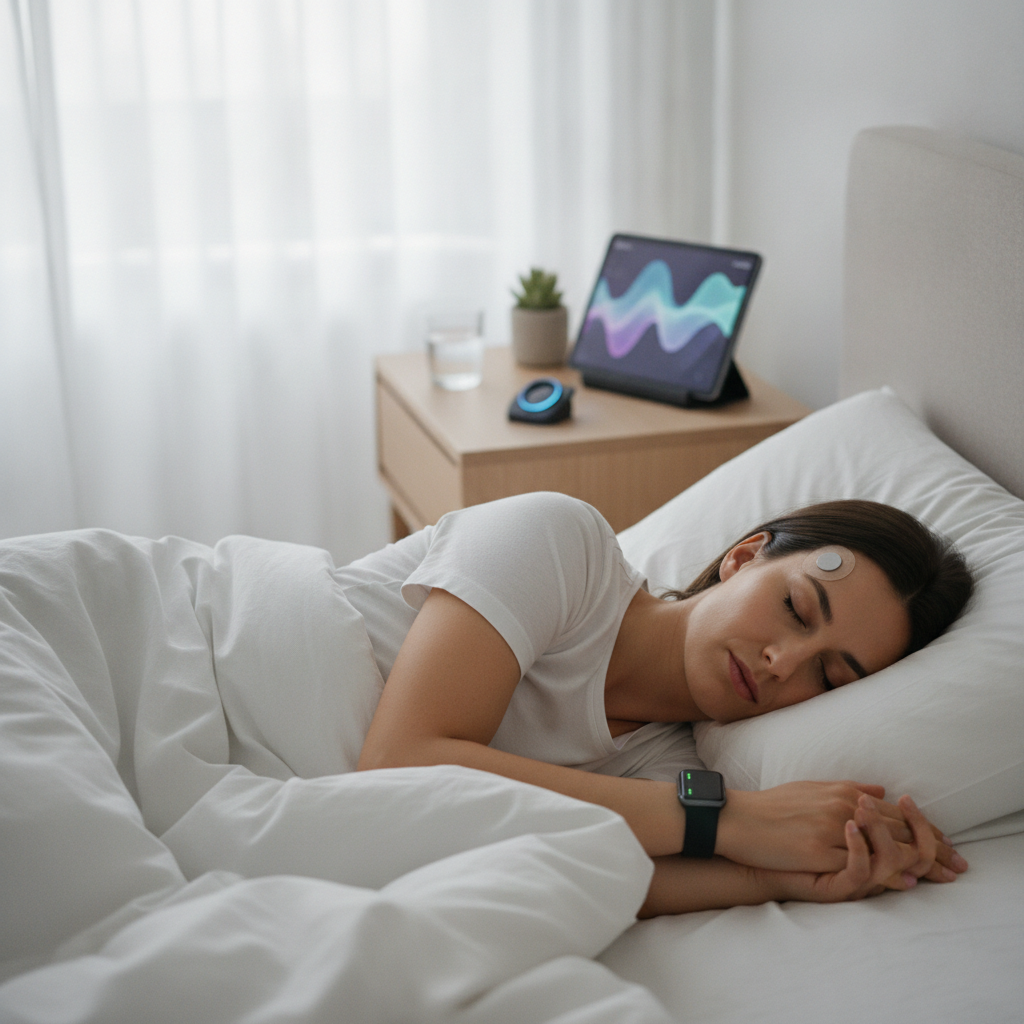
Sleep has always been understood as essential to human health, but only recently has technology made it possible to observe that sleep with the kind of granular detail once reserved for clinical lab settings. Wearable devices from companies like Garmin, Apple, and Oura have transformed the wrist and finger into passive monitoring stations, continuously tracking physiological signals through the night and translating them into recovery scores, sleep stage breakdowns, and personalized alerts. What was previously a matter of guesswork — waking up tired without knowing why — is now increasingly quantifiable, and that shift carries real implications for how people understand and respond to poor rest.
What Modern Sleep Sensors Actually Measure
The sensing hardware embedded in contemporary wearables goes well beyond basic motion detection. Photoplethysmography sensors, the same technology used to measure heart rate during exercise, now track blood oxygen saturation, heart rate variability, skin temperature fluctuations, and respiratory rate across an entire night. The Oura Ring, for example, places these sensors close to capillary-rich tissue on the finger, capturing subtle physiological changes that a wrist-worn device might miss. When combined with accelerometer data that detects body movement, these inputs allow onboard algorithms to estimate sleep stages — including light, deep, and REM phases — with meaningful accuracy. The result is a nightly physiological snapshot that most people have never had access to before.
The Role of Recovery Scores in Daily Decision-Making
Raw biometric data is only useful if it can be interpreted, and this is where sleep-sensing platforms have invested considerable effort. Apps like Garmin's Body Battery system and the Oura app's Readiness Score synthesize multiple data streams into a single daily number that represents overall recovery status. When that score is low, users receive specific explanations — elevated resting heart rate, poor deep sleep percentage, high respiratory variability — that point toward likely causes rather than simply reporting that rest was insufficient. This feedback loop changes behavior in practical ways. Athletes may choose to skip high-intensity training on low-readiness days, and office workers managing stress may use chronic low scores as a prompt to evaluate sleep hygiene, alcohol intake, or schedule-driven disruptions.
How Wearables Are Bridging the Gap to Clinical Awareness
One of the more consequential developments in this space is the growing ability of consumer wearables to flag physiological patterns that warrant medical attention. Devices including the Apple Watch and certain Withings sleep trackers have incorporated features that detect irregular breathing patterns associated with sleep apnea, a condition that affects a significant portion of the adult population and frequently goes undiagnosed for years. These tools don't replace a formal sleep study, but they can surface consistent anomalies that prompt someone to seek clinical evaluation sooner than they otherwise would. The gap between struggling with daytime fatigue and actually consulting a sleep specialist has historically been wide, and wearable data is beginning to provide the evidence people need to take that step.
Limitations and the Risk of Over-Interpretation
Despite genuine advances, sleep-sensing wearables operate with meaningful limitations that users benefit from understanding. Consumer-grade devices estimate sleep stages rather than measure them directly, and their accuracy varies depending on individual physiology, device placement, and the quality of the underlying algorithm. Misclassified sleep stages can lead to misplaced concern or misplaced confidence, and no wearable currently available can diagnose a sleep disorder in any clinical sense. There's also a behavioral risk: some people develop heightened anxiety around their sleep data, a pattern researchers have begun calling orthosomnia, where the pursuit of better sleep metrics paradoxically worsens the quality of rest. Treating recovery scores as directional guides rather than diagnostic certainties is a more productive and accurate framing.
The Personalization Layer Shaping Future Development
The next frontier in wearable sleep technology lies not in adding more sensors but in making better use of longitudinal data. Platforms that track months or years of sleep behavior can identify personal patterns — such as how a late meal, a stressful workday, or a change in altitude affects an individual's recovery — with a specificity that population-level averages cannot provide. Companies including Whoop are building subscription models around this kind of ongoing personalization, offering coaching recommendations that adjust based on accumulated data about each user's physiology. As on-device machine learning continues to improve, these recommendations will become more accurate and more contextualized, moving wearable sleep tools closer to genuinely individualized health guidance than generic wellness advice.
What You Can Do With the Data Your Device Already Collects
If you already wear a device with sleep-sensing capabilities, the most useful starting point is consistency — wearing it every night for several weeks before drawing any conclusions. Look for patterns rather than reacting to individual nights, since a single poor score tells you far less than a week-long trend of disrupted deep sleep or elevated resting heart rate. Pay attention to the variables your lifestyle introduces: if your recovery score reliably drops after late-night screen time or alcohol, that's actionable information your device is offering for free. If you notice persistent flags around breathing irregularities or oxygen dips, bring that data to a physician rather than diagnosing yourself based on an app. Use the readiness scores as a checkpoint before intense physical effort, not as a reason to feel anxious about a night you can't redo.
Sleep-sensing wearables represent a genuine shift in how personal health data reaches the people who need it most, and that shift is still accelerating. As sensor accuracy improves, as algorithms are trained on more diverse populations, and as health systems begin to accept wearable data as a legitimate input into clinical conversations, these devices will likely become a standard part of proactive health management rather than a niche enthusiast product. The most meaningful progress won't come from hardware alone — it will come from helping people understand what their data is actually saying and how to respond to it with proportionality and purpose.