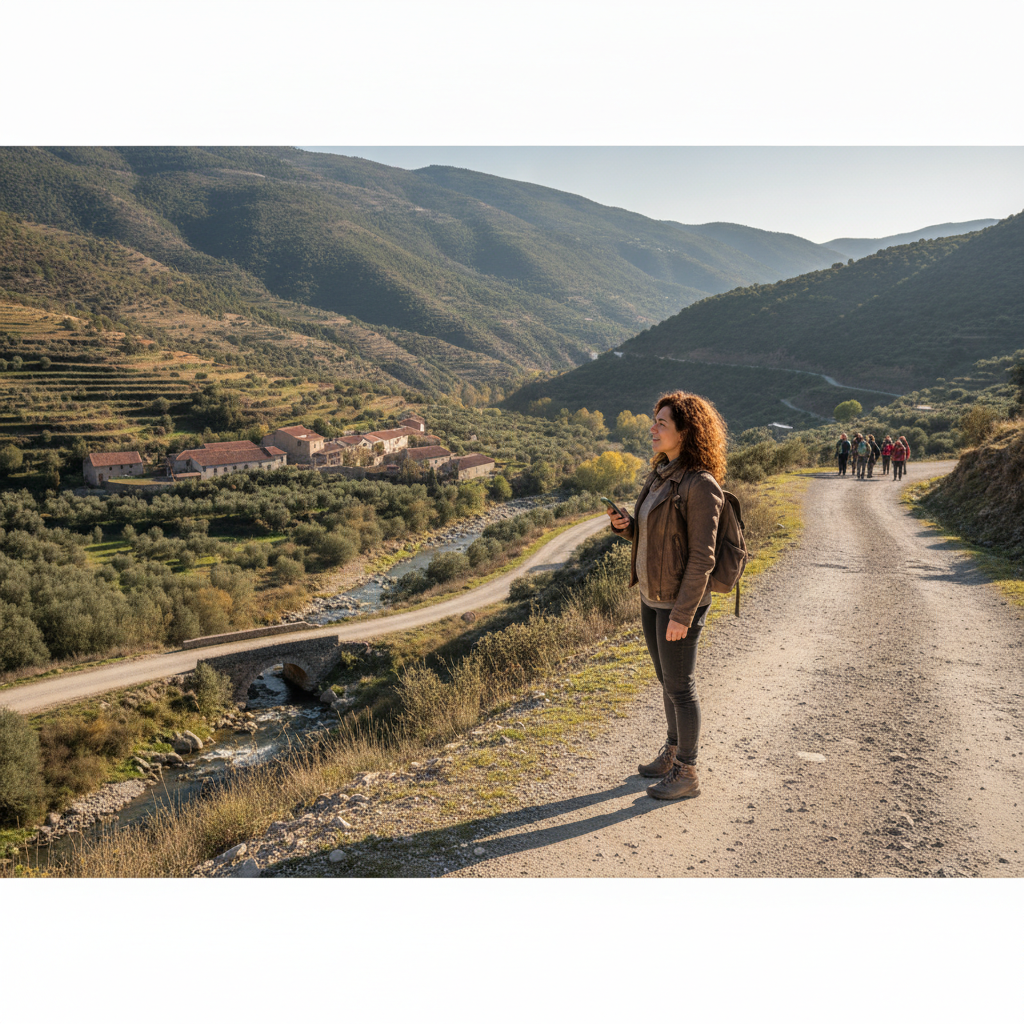
There is a particular kind of knowledge that only arrives through solitude — not the solitude of a quiet evening at home, but the more demanding, more clarifying solitude of moving through an unfamiliar city without a single familiar face nearby. Solo travel in one's thirties occupies a unique place in the broader story of a life. It arrives after the restless, budget-hostel wandering of one's twenties, yet before the more settled commitments that tend to accumulate with each passing decade. It is travel stripped of performance, of consensus, and of the gentle social scaffolding that group trips quietly provide — and what remains, once all of that is removed, turns out to be something genuinely irreplaceable.
Group travel has real and lasting pleasures. Shared meals in Porto's Bairro da Sé district, arguments over which train to catch through the Swiss Alps, the collective memory that binds friends across years — none of these should be dismissed. But group dynamics, by their very nature, compress individual experience. Decisions become negotiations. Preferences get averaged out. The traveler who might have lingered another hour in Kyoto's Fushimi Inari Shrine at dusk, watching the last light filter through the vermillion torii gates, instead rejoins the group for dinner reservations made two weeks in advance. The trip is wonderful. But a certain depth remains untouched.
What Does Solitude Actually Reveal About a Traveler's Character?
The first and perhaps most disorienting lesson of solo travel in one's thirties is the discovery of how much one's sense of self has been socially maintained. Among friends, personality tends to calcify into familiar roles — the planner, the comedian, the one who always knows a good restaurant. Alone in an unfamiliar place, those roles dissolve almost immediately. In their absence, something more essential tends to surface: genuine preferences, genuine rhythms, genuine tolerances. The traveler who assumed they were an extrovert may discover, somewhere between a solo dinner in Lisbon and a morning wandering the Alfama neighborhood alone, that they find deep satisfaction in extended quiet. The opposite discovery is equally common and equally valuable.
Cultural immersion — the kind that travel writers describe as *wabi-sabi*, the Japanese aesthetic of finding beauty in impermanence and imperfection — becomes genuinely accessible when there is no group insulating the traveler from the texture of daily local life. Without companions to default to, the solo traveler in their thirties tends to engage more readily with strangers, to eat at the counter rather than the table, to accept invitations they might otherwise decline. These small decisions compound into experiences of remarkable intimacy with a place. A solo afternoon in Oaxaca, Mexico, wandering the mercado and accepting a stranger's recommendation for mezcal, teaches more about regional culture than three days on a curated group tour.
How Does Solo Travel Change the Relationship With Decision-Making?
One of the quieter gifts of solo travel is the restoration of full decision-making authority over one's own time. This sounds minor until one actually experiences it. There is no vote on whether to visit the museum or the market. There is no compromise on pace. The traveler moves slowly through what interests them and skips entirely what does not. Over the course of even a short solo trip — a week along the Amalfi Coast, say, or a long weekend in Marrakech's medina — this unfiltered relationship with personal preference becomes deeply instructive. The traveler learns what genuinely engages them, separate from social expectation or the enthusiasm of companions. They return home with a clearer sense not just of the places they visited, but of themselves as a person with particular and specific desires.
This clarity tends to carry over. People who travel solo in their thirties often describe a measurable shift in how confidently they make decisions in other areas of life — in careers, in relationships, in how they structure their days. The connection is not incidental. Solo travel, particularly in one's thirties when self-knowledge is already deepening naturally, functions as a kind of accelerated introspection. The removal of the social mirror forces a more direct reckoning with who one actually is, rather than who one appears to be in company.
What the Experience of Genuine Discomfort Actually Offers
Solo travel in one's thirties is not uniformly pleasant, and that is precisely its point. There will be a missed connection in a city where nothing is written in a familiar alphabet. There will be an evening of genuine loneliness, perhaps in a beautiful place, which makes the loneliness feel almost absurd. There will be the moment of navigating a minor crisis — a lost wallet, a language barrier at a pharmacy, an unexpected transport strike in Rome — with no one to share the burden. These moments are uncomfortable in real time. But they also carry a particular satisfaction that group travel rarely provides, because the resolution belongs entirely to the traveler. The confidence that follows is not borrowed from a group dynamic. It is genuinely earned.
Apps like Google Translate and Rome2Rio have reduced the practical barriers of solo navigation considerably, but they cannot eliminate the deeper challenge of being wholly responsible for oneself in an unfamiliar environment. That responsibility, for people in their thirties who may spend much of daily life managing obligations to others, becomes an unexpected form of relief. To be answerable only to oneself, even briefly, is both humbling and restorative.
What You Carry Home That No Photograph Can Hold
If you return from a solo trip in your thirties and find it difficult to explain exactly what happened — not in terms of sights seen or miles covered, but in terms of what shifted — that difficulty is itself part of the answer. The knowledge that solo travel deposits is not easily narrated. It lives in the body, in the quieter confidence of someone who has sat alone at a café table in a foreign country and felt, eventually, entirely at ease. It lives in the recalibrated sense of what is actually necessary versus what is merely habitual. It lives in the renewed capacity to be curious without needing that curiosity validated by someone standing beside you. There is a particular kind of knowledge that only arrives through solitude — and having sought it once, in one's thirties, in some beautiful and unfamiliar corner of the world, it tends to stay.