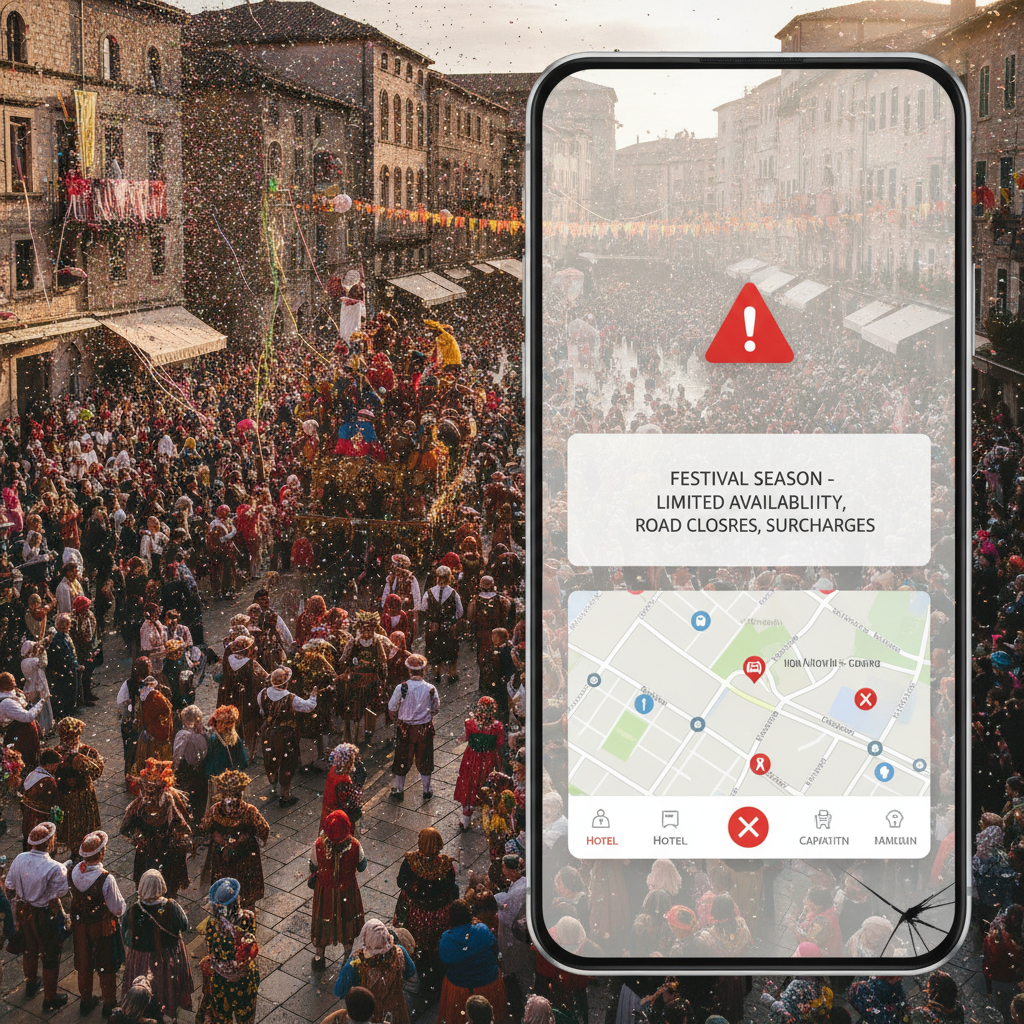
There is a particular kind of traveler who books a flight, checks into a hotel, and only discovers upon arrival that the entire city has transformed into something unrecognizable — streets closed, hotels triple-booked three neighborhoods over, and every restaurant running a prix-fixe menu designed for celebration rather than casual dining. Festival season travel is its own category entirely, and treating it like an ordinary high-season trip is one of the most common — and most correctable — mistakes a traveler can make.
When the Calendar Becomes the Destination
Traveling during a local festival is fundamentally different from traveling during peak tourist season. High season brings crowds, higher prices, and longer queues, but the city itself remains oriented toward visitors. Festival season, by contrast, orients the city inward — toward its own community, its own rituals, its own rhythms. The streets belong to the celebration first, and tourists second. Understanding this shift in priority changes how thoughtful travelers approach every element of their plans, from where they sleep to how they move.
Accommodation Availability Follows a Different Logic
Standard high-season booking wisdom — reserve two to three months ahead, compare rates on Booking.com or Expedia — often falls short during major local festivals. For events like Carnaval in Rio de Janeiro or Diwali celebrations in Jaipur, accommodations within the festival's gravitational pull can vanish a year in advance. The logic here isn't simply about popularity; it's about geography. Festival-adjacent neighborhoods carry a premium that standard peak-season pricing rarely replicates. Booking accommodations slightly outside the central zone — in quieter residential districts — can offer both availability and a more authentic vantage point, often at a fraction of the inflated central rate.
Transportation Requires Rethinking From the Ground Up
City infrastructure during a major festival often operates under entirely different rules. Roads close. Subway lines run extended hours but become extraordinarily congested. Ride-share apps like Uber surge dramatically during parade routes and evening spectacles. In cities like Seville during Feria de Abril, locals rely on temporary shuttle systems and walking routes that aren't intuitive for first-time visitors. Researching the festival's official transport advisories — usually published by city tourism boards weeks in advance — is not optional planning; it's essential groundwork. A traveler who maps their movement patterns around festival logistics moves through the experience with far less friction.
The Concept of *Programación* and What It Actually Means
Many festivals operate on what Spanish-speaking cultures call a *programación* — a formal schedule of events, stages, processions, and performances that governs the entire festival calendar. This programación is often published publicly and updated regularly, but it requires active seeking out rather than passive discovery. Travelers who arrive without consulting it often miss the most culturally significant moments — the early morning processions, the neighborhood-specific ceremonies, the events that locals consider the heart of the celebration rather than the tourist-facing exterior. Carnivals, harvest festivals, and religious observances all carry interior layers of meaning that only reveal themselves to those who took the time to look before they arrived.
Restaurants, Markets, and Menus Transform Completely
Food access during festival season operates on its own timeline. Many local restaurants close entirely during major celebrations so owners can participate. Others pivot to set menus, festival-specific dishes, or street food formats that differ entirely from their standard offerings. In cities like Chiang Mai during Yi Peng — the floating lantern festival — entire market districts temporarily restructure around ceremonial food vendors. Travelers who expect to find their preferred dining rhythm during these periods often find themselves frustrated. The better approach involves researching which food traditions belong to the festival itself, embracing them fully, and carrying a backup plan for evenings when conventional restaurants simply aren't operating.
Crowd Dynamics Are Not the Same as Tourist Crowds
Festival crowds feel different from high-season tourist crowds, and the distinction matters practically. High-season crowds gather around the same attractions at predictable times. Festival crowds are diffuse, emotionally charged, and move in patterns tied to ritual and procession rather than sightseeing logic. This creates both unexpected moments of access — certain attractions become less visited as locals celebrate elsewhere — and genuine congestion in places a standard tourist map would never flag. Keeping a flexible daily structure rather than a rigid itinerary gives travelers room to follow what's unfolding organically, which is ultimately where the most memorable festival experiences live.
Arriving With Curiosity as the Primary Tool
If festival season demands a different kind of planning, it also demands a different kind of presence once you're there. Standard high-season travel rewards efficiency — maximizing sites visited, experiences checked off, photographs taken. Festival travel rewards patience, observation, and willingness to be swept into something larger than a personal agenda. You may find yourself watching a ceremony you didn't plan for, sharing a table with strangers during a communal meal, or simply standing at the edge of a procession as something ancient and alive passes by.
That traveler who arrived to find the city transformed — streets closed, menus changed, crowds moving to rhythms they didn't yet understand — has a choice in that moment. The ones who planned well enough to expect the unexpected are the ones who walk into it with open hands rather than a checklist. The city hasn't become unrecognizable; it has simply become itself. That distinction is everything.