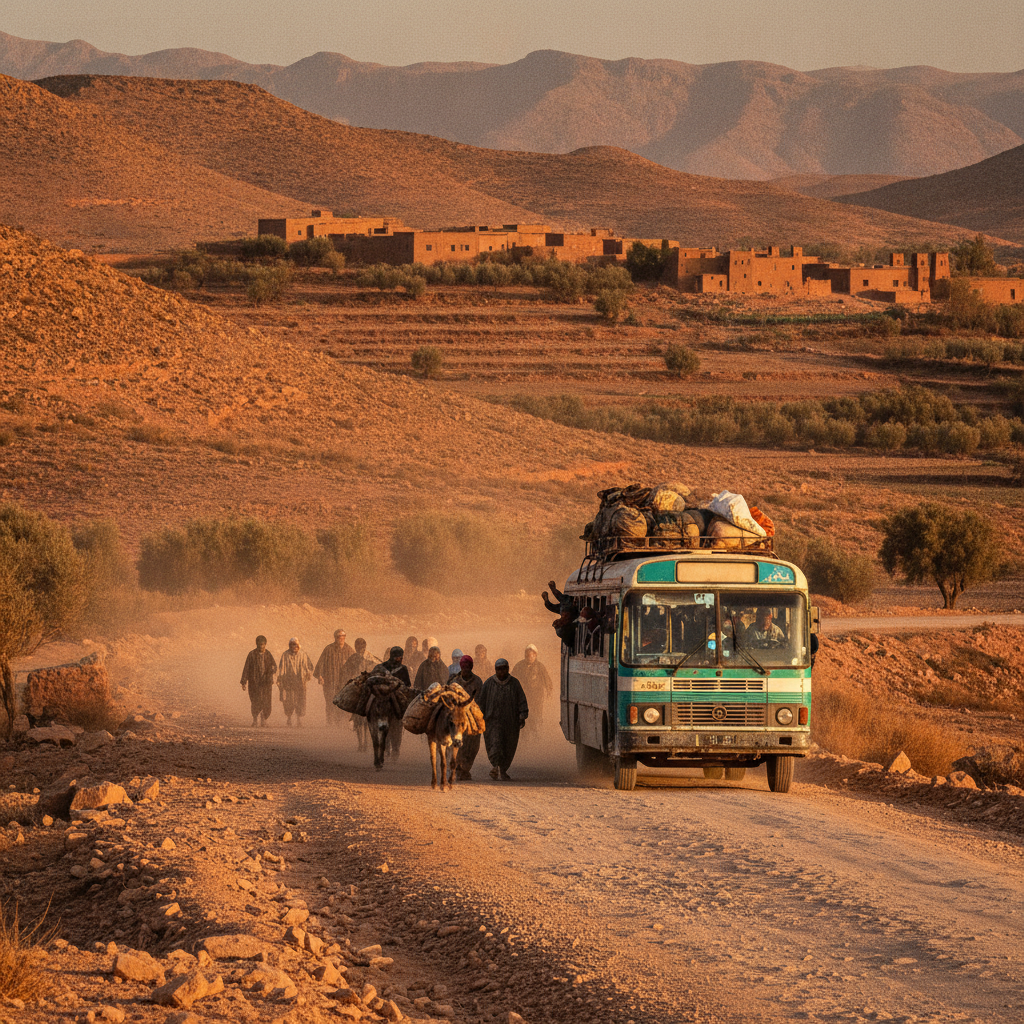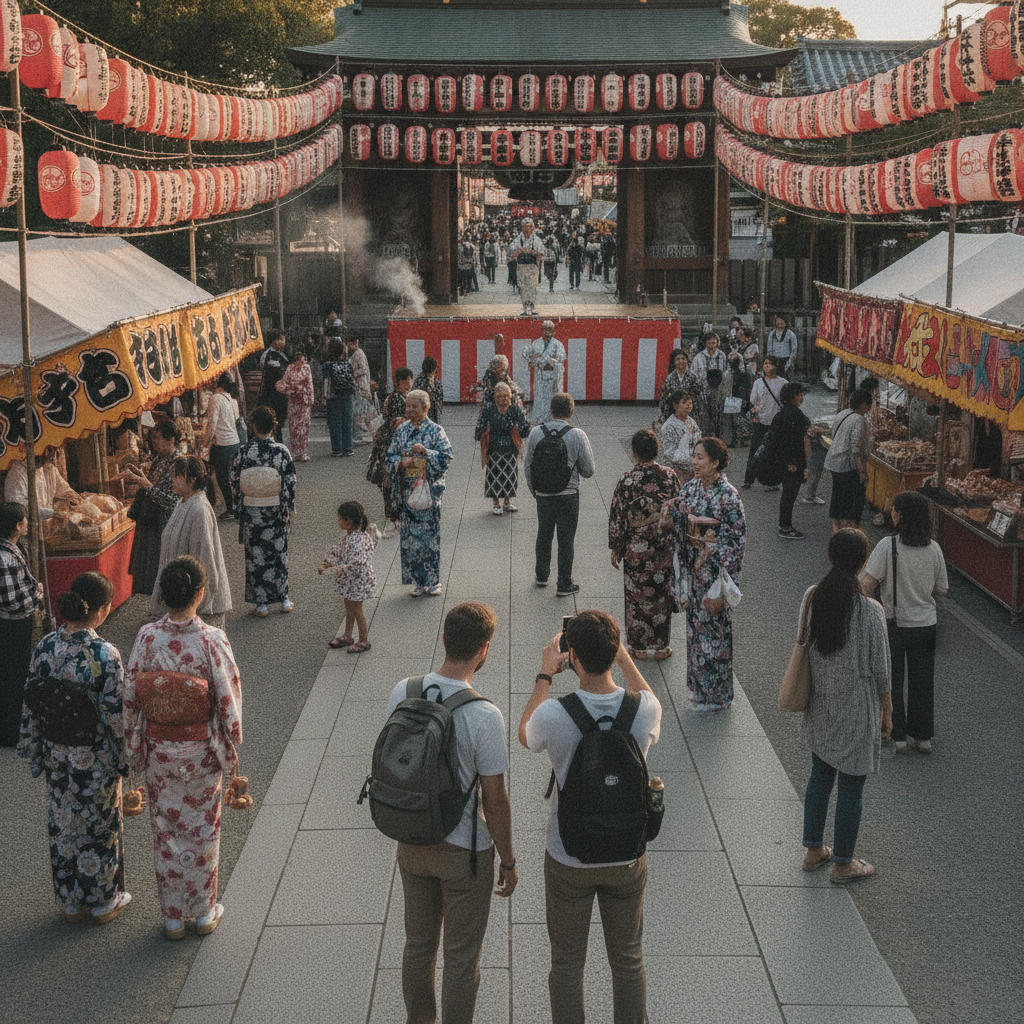
There is a version of every city that most travelers never see. It exists behind the curated restaurant menus, the museum admission queues, and the well-worn walking tours — a version that surfaces only when ordinary life pauses, when work stops and ritual begins, and when a country turns inward to celebrate itself. That version is almost exclusively reserved for national holidays.
Travelers who happen to be present during these moments often describe them as accidental gifts. They arrived for the sights and stayed for something far more revealing: the texture of daily life when people are not performing it for outsiders.
When the Ordinary World Steps Aside
National holidays strip away the commercial layer that usually mediates the relationship between visitor and place. Shops close. Streets fill not with tourists but with families, neighbors, and elderly residents who rarely appear in the pedestrian zones most visitors haunt. In Lisbon during the Festa de Santo António in June, entire neighborhoods in Alfama and Mouraria transform overnight — grills appear on sidewalks, sardines smoke over open coals, and the social architecture of the city becomes briefly visible. Who talks to whom, which streets belong to which community, how strangers interact without the social lubricant of commerce — these details are hard to observe during a standard visit but become unavoidable during a holiday.
The pace changes too. National holidays often carry a distinct emotional register that varies sharply from one country to another. Some are solemn, marked by silence, candlelight, and religious procession. Others are loud, chaotic, and gloriously unself-conscious. Neither type can be fully understood from a guidebook.
Ritual as Cultural Vocabulary
Every nation has what anthropologists call rites of intensification — recurring ceremonial moments that reinforce shared identity. For travelers, witnessing these rituals without prior context can be disorienting, but that disorientation is itself informative. The confusion signals the presence of something genuinely local, something that has not yet been smoothed into a format designed for outside consumption.
During Diwali in Jaipur, the city's relationship with light, community, and domestic space becomes legible in ways that no heritage tour replicates. Families arrange diyas — small oil lamps — along windowsills and rooftops in patterns that carry meaning specific to region and household tradition. The collective act of illumination is not a performance; it is a private conversation conducted in public. Travelers present for it are eavesdropping, in the most respectful sense, on something real.
Food, too, functions as ritual vocabulary during national holidays. Dishes that never appear on tourist menus emerge from home kitchens and street stalls. Specific sweets signal specific occasions. The ingredients themselves often carry symbolic weight that stretches back centuries — weight that only becomes apparent when the dish is eaten in context rather than adapted for a travel magazine.
The Social Map That Holidays Draw
One of the most underappreciated benefits of traveling during a national holiday is the social geography it reveals. Cities that feel horizontally arranged during ordinary tourist days — museums here, markets there, old town in one direction — reveal a vertical social structure during holidays. Class, religion, neighborhood loyalty, and generational difference all surface when people gather around shared events.
In Seoul during Chuseok, the autumn harvest festival, the movement of the city itself tells a story. Traffic flows outward as families return to provincial towns and ancestral villages. The capital empties in ways that feel dramatic to anyone expecting the usual urban density. What remains is a quieter, more reflective version of Seoul — one that reveals how much of the city's everyday energy is maintained by people whose roots lie somewhere else entirely.
Conversations with locals during holidays carry a different quality as well. With fewer transactions to manage, people are often more willing to explain what is happening around them. The exchange shifts from service to something closer to genuine exchange.
What Regular Tourism Consistently Misses
Standard tourism optimizes for access to landmarks, efficiency of movement, and density of experience. These are reasonable goals, but they systematically filter out the aspects of a culture that are most resistant to packaging. National holidays are almost impossible to package, which is precisely why they reward the traveler willing to be present without a fixed itinerary.
The Carnaval celebrations in Barranquilla, Colombia — recognized by UNESCO for their cultural significance — operate across multiple days with different neighborhoods taking the lead at different times. A traveler following a fixed tour route will see a version of Carnaval. A traveler willing to follow the sound and stay past the scheduled highlights will see something closer to the real thing: the exhausted performers resting between sets, the families who have attended every year for three generations, the arguments about which comparsa group performed best, the small children learning choreography by watching older siblings.
These unscheduled moments are where cultural understanding actually accumulates.
Preparing to Be Present, Not Just Present
If you find yourself in a foreign country during a national holiday, the most valuable thing you can bring is patience and genuine curiosity rather than a checklist. Research the holiday's origins before arrival — understanding whether it marks an independence date, a religious observance, or an agricultural cycle changes how you interpret what you witness. Download offline translation tools before connectivity becomes unreliable. In cities like Kyoto or Marrakech, where holiday foot traffic overwhelms digital networks, offline resources are practical necessities.
Accept that some businesses will close, some neighborhoods will be inaccessible, and some moments will feel private in ways that warrant stepping back rather than photographing. The willingness to observe without extracting is, in many cultures, the quality that earns the most genuine welcome. When in doubt about whether to participate or to watch, watch first — and wait for an invitation that often comes naturally.
The traveler who arrived expecting a standard visit and found instead a city in the middle of talking to itself about who it is — that traveler leaves with something that no planned itinerary could have produced. The sardines, the diyas, the empty Seoul streets, the comparsa arguments: these are not tourist experiences. They are glimpses of a place being genuinely, unselfconsciously itself. And that version of a country, once seen, changes everything about how its ordinary days are understood.