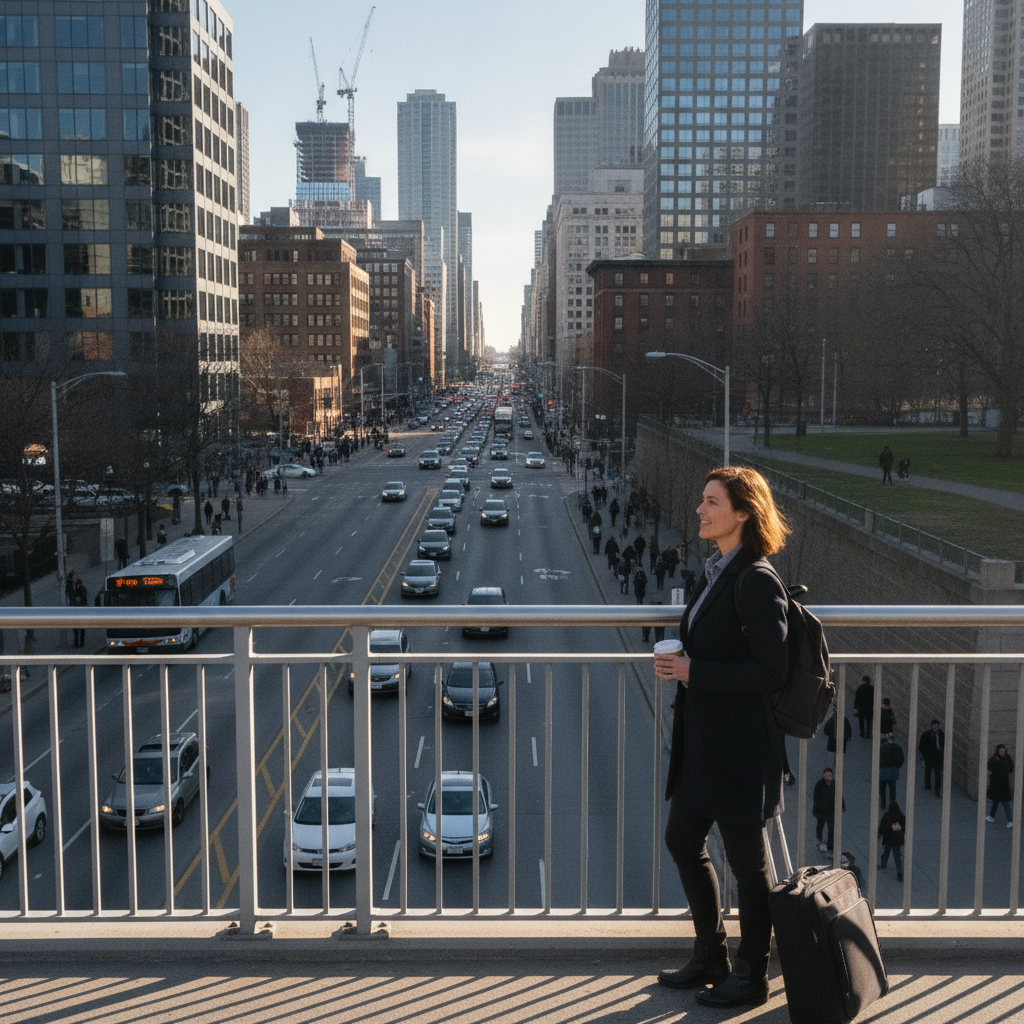
The timing of an arrival shapes everything that follows. Most travelers choose weekend arrivals out of convenience — a Friday evening flight, a Saturday morning train — without realizing that the city greeting them during those hours is performing a version of itself rather than simply living. A city on a weekday morning is unguarded, unhurried in its own particular rhythm, moving through its routines with the quiet confidence of a place that isn't staging anything for anyone. That distinction, subtle at first, accumulates into something that profoundly changes how a traveler understands and remembers where they've been.
There is a term used in cultural geography — *quotidian rhythm* — which refers to the daily, ordinary pulse of a place: the bakeries opening before dawn, the commuters with their practiced movements, the street cleaners who finish before most tourists have found the coffee pot. Arriving on a weekday morning places a traveler directly inside that rhythm rather than beside it. The experience feels less like being a spectator and more like being briefly absorbed, which is exactly what genuine travel promises and rarely delivers.
The City Before It Performs for Visitors
A city on a weekend morning is often a city in costume. Markets are fuller, streets are louder, attractions operate at peak capacity, and the neighborhoods most associated with tourism become dense with the energy of people also experiencing them for the first time. It is lively and often beautiful, but it is a condensed version — the highlights reel. A weekday morning, particularly a Tuesday or Wednesday, strips that performance away. In Lisbon, the narrow streets of Alfama carry the sound of neighbors talking across balconies rather than tour group narration. In Osaka's Namba district, the early morning light catches shopkeepers quietly arranging their displays before the day's noise arrives. The city exists on its own terms, and arriving into that moment creates an immediate sense of intimacy that takes weekend visitors days to find, if they find it at all.
What Local Routine Teaches That Guidebooks Cannot
Observing a place in its working hours reveals the social architecture that underlies everything a guidebook highlights. The way a city moves during a weekday morning — which café gets the long line of office workers, which street market operates only three days a week, which transit station becomes a brief social gathering point — tells a traveler where the genuine center of gravity lies. This is distinct from the *tourist infrastructure*, a phrase urban planners use to describe the parallel economy that exists to serve visitors, which often runs alongside local life without intersecting it. A weekday arrival forces a natural collision between the two. The traveler navigating the same metro car as teachers and construction workers and students is gathering information no app or review platform can provide.
The Practical Advantages That Compound Over the Trip
Beyond the atmospheric difference, a weekday morning arrival carries logistical benefits that ripple across the entire stay. Major museums in cities like Amsterdam or Florence are measurably quieter on weekday mornings, particularly before ten o'clock. Restaurants that locals actually use — rather than the ones positioned nearest to landmark squares — are easier to enter, easier to linger in, and more likely to have staff willing to offer genuine recommendations when the room isn't turning tables at capacity. Accommodation check-ins tend to be smoother, hotel lobbies less congested, and the small negotiations of settling into a new place — understanding the neighborhood layout, locating the nearest market, identifying which streets are pleasant to walk — happen without the weekend crowd pressing in around them. These advantages don't appear on any itinerary, but they shape the first twenty-four hours in ways that determine the emotional register of the entire trip.
Arriving Into Stillness as a Travel Philosophy
There is a broader philosophy embedded in the weekday arrival preference — one that aligns with what slow travel advocates have long described as *presence over productivity*. The traveler who arrives Tuesday morning rather than Friday evening isn't simply saving time or avoiding lines. They are choosing to meet a place at a moment when it has no particular interest in being met. That asymmetry is valuable. It asks the traveler to pay attention rather than be entertained, to notice rather than consume. The neighborhood café in Reykjavik where regulars speak in low voices over their laptops, the quiet canal path in Utrecht where cyclists move in the grey morning light — these are not scenes that arrange themselves for tourism. They simply exist, and a weekday arrival is the ticket in.
When you step off a train or out of a taxi on a quiet Wednesday morning, the city doesn't acknowledge you, and that indifference is a gift. It means the place you're seeing is real — not curated, not compressed into its most photogenic weekend self. The first café you find will likely be filled with people who know each other. The streets will carry sounds that belong to the week rather than the event. Your first impression won't be formed by what the city wants you to think of it, but by what it simply is. And that impression, built from ordinary moments rather than peak ones, tends to be the one that stays — the one that makes you feel, weeks later and far away, that you actually knew the place rather than just visited it.