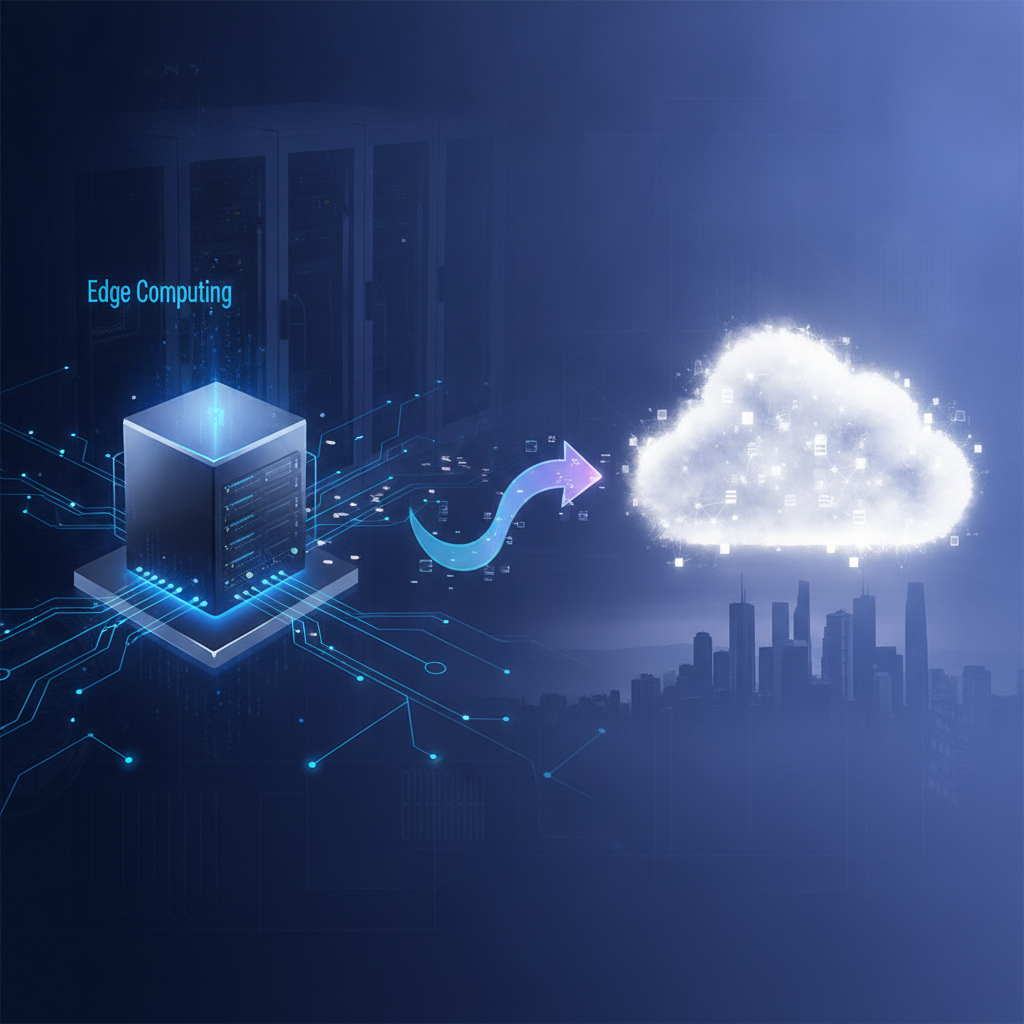
The way organizations handle data has become one of the most consequential infrastructure decisions of the modern era. For years, cloud computing dominated that conversation — and for good reason. But a quieter shift has been underway, one that's pushing computation away from centralized data centers and toward the devices, sensors, and locations where data actually originates. Understanding the difference between edge and cloud computing, and why businesses are increasingly blending both, helps clarify where enterprise technology is heading.
What Cloud Computing Actually Does
Cloud computing centralizes processing power and storage in massive, remote data centers operated by companies like Amazon Web Services, Microsoft Azure, and Google Cloud. Organizations send data to these facilities over the internet, where it's processed, stored, and returned as results or insights. This model dramatically reduced the cost of enterprise computing by turning infrastructure into a subscription service. A startup in Austin can access the same processing muscle as a Fortune 500 company without building a single server room. The tradeoff, however, is latency — the time it takes for data to travel to the cloud and back.
The Core Concept Behind Edge Computing
Edge computing moves processing power closer to where data is generated — onto local devices, gateways, or regional servers rather than distant cloud facilities. A factory floor running predictive maintenance, for example, doesn't need to send every sensor reading to a data center in Virginia. Instead, a local edge server can analyze that data in milliseconds, trigger alerts, and only send summary reports upstream. The result is faster response times and reduced bandwidth consumption. Companies like Dell Technologies and Cisco have built dedicated edge hardware product lines specifically to support this kind of distributed architecture.
Why Latency Matters More Than It Used To
As technology evolves, the cost of delay has grown dramatically. Autonomous vehicles, remote surgical systems, and real-time fraud detection all depend on processing that happens in fractions of a second — well below what even the fastest cloud round-trip can consistently deliver. A self-driving car cannot wait 200 milliseconds for a cloud server to confirm whether the object ahead is a pedestrian. Edge computing solves this by keeping the most time-sensitive decisions local. For applications where even a slight lag creates risk, moving computation to the source isn't just efficient — it's essential.
Where Cloud Still Holds the Advantage
Despite the momentum behind edge computing, the cloud isn't being replaced. It remains the dominant platform for workloads that don't demand instant response — long-term data storage, training machine learning models, running enterprise applications, and managing global collaboration tools. Microsoft Azure and AWS handle these tasks at a scale and cost efficiency that on-premise or edge systems rarely match. Many organizations run hybrid architectures where edge handles real-time processing and the cloud handles everything else. This layered approach is increasingly the standard rather than the exception.
Industries Leading the Shift Toward Edge
Manufacturing, healthcare, retail, and telecommunications have emerged as the earliest adopters of serious edge deployments. In manufacturing, edge systems monitor equipment and flag failures before they happen. In retail, stores use edge-powered computer vision to track inventory in real time without sending live camera feeds to the cloud. Telecommunications companies, particularly those building out 5G infrastructure, are embedding edge computing nodes directly into network architecture. Verizon, for instance, has integrated edge computing into its 5G rollout as a way to offer ultra-low-latency services to enterprise clients. Healthcare organizations are exploring edge for on-device diagnostics that must remain secure and responsive.
How to Think About the Right Architecture for Your Organization
Choosing between edge and cloud isn't a binary decision — it's a question of where each workload belongs. If you're running applications that require real-time responses, involve sensitive local data, or generate more bandwidth than centralized processing can economically handle, edge infrastructure deserves serious consideration. If your priority is scalability, global reach, or access to complex analytical tools, cloud platforms remain the most practical choice. For most organizations in 2026, the honest answer involves both: a cloud backbone that handles storage, analytics, and management, paired with edge nodes that handle the moments when speed and proximity matter most. Mapping your specific data flows before committing to any single architecture will save significant time and cost down the road.
The Direction Both Technologies Are Heading
The boundary between edge and cloud is continuing to blur. Major cloud providers are releasing edge-compatible hardware and software that extends their platforms outward — Amazon's AWS Outposts and Microsoft's Azure Stack are built precisely to bridge this gap. Artificial intelligence is accelerating the shift, as more organizations want AI inference running locally rather than routing every prediction through a distant server. As 5G networks mature and edge hardware becomes cheaper and more standardized, the architecture of enterprise computing will look less like a central hub and more like a distributed mesh. Businesses that understand both models today will be better positioned to adapt as that infrastructure continues to evolve.