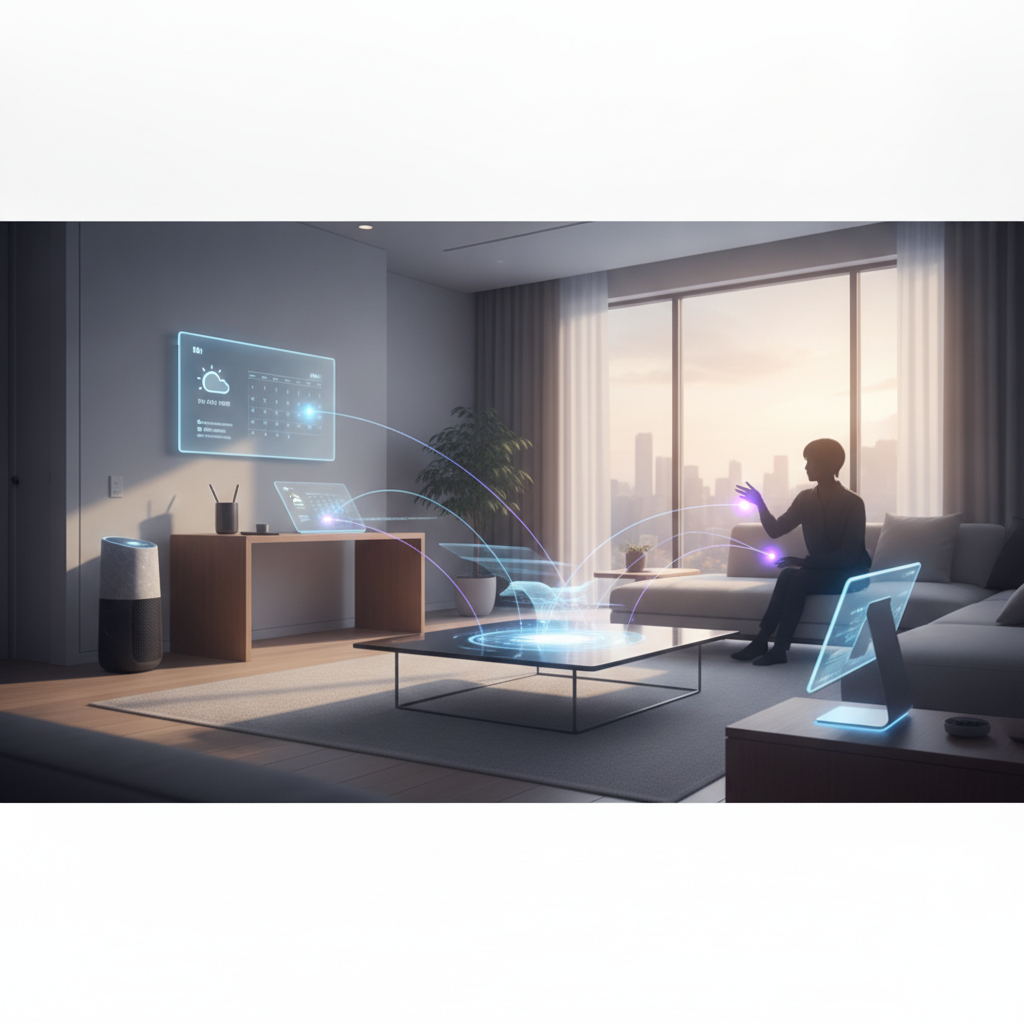
Technology has always moved toward invisibility — from room-sized machines to pocket-sized phones, and now to systems that require almost no conscious interaction at all. Ambient computing represents the next step in that progression, embedding intelligence into the physical environment so quietly that people often don't notice it working. Thermostats, lighting systems, kitchen appliances, and even door locks are increasingly responsive to context rather than commands, reshaping how ordinary spaces function.
The Core Idea Behind Ambient Computing
Ambient computing refers to a model in which technology recedes into the background, anticipating needs rather than waiting for input. Rather than requiring a person to unlock a screen or issue a verbal command, ambient systems use sensors, machine learning, and network connectivity to interpret environmental signals — movement, sound, temperature, presence — and respond accordingly. The result is a layer of intelligence woven into the built environment itself. Google's work on contextual awareness, for example, reflects this philosophy: devices should understand what's happening around them, not just what they're told to do.
The Shift From Commands to Context
For decades, interacting with technology meant learning its language. Users typed commands, navigated menus, or spoke precise phrases. Ambient computing inverts that relationship. The device adapts to the person rather than the other way around. A smart lighting system from Philips Hue, for instance, doesn't simply respond when asked — it can adjust color temperature based on the time of day, occupancy patterns, and even circadian rhythms. This kind of passive responsiveness reduces the cognitive friction that typically accompanies technology use. People don't have to remember to adjust the lights; the system handles it as a background function.
Sensors as the Building Blocks of Awareness
None of this works without a dense network of sensors. Motion detectors, microphones, cameras, proximity sensors, and environmental monitors are now embedded in consumer devices at scale. Amazon's Echo lineup and Apple's HomePod both rely on always-on audio processing to detect presence and intent. Beyond the home, retail environments increasingly use sensors to track foot traffic and adjust digital displays in real time. The data these sensors generate is substantial, and the systems interpreting it grow more accurate over time. Ambient computing, in this sense, is not a fixed product category but a continuously improving layer of awareness.
Integration Across Platforms and Ecosystems
Ambient computing gains its real power from cross-device integration. A single sensor reading becomes more meaningful when it can inform multiple systems simultaneously — a motion signal that adjusts the thermostat, dims the lights, and pauses a media stream all at once. Platforms like Apple HomeKit and Samsung SmartThings have built ecosystems specifically designed to allow this kind of coordinated response. The challenge has always been interoperability — getting devices from different manufacturers to communicate reliably. The Matter protocol, a connectivity standard backed by major technology companies, has made meaningful progress toward solving that problem, allowing a broader range of devices to share data within unified systems.
Implications for Workplace and Public Environments
While ambient computing often gets discussed in the context of the smart home, its implications extend far beyond residential spaces. Office buildings use occupancy sensing to optimize energy use, automatically adjusting HVAC systems and lighting based on which rooms are in use. Hospitals are exploring sensor-based monitoring that tracks patient movement and environmental conditions without requiring direct interaction from clinical staff. Retail environments, airports, and transportation hubs are all beginning to incorporate ambient intelligence in ways that streamline operations while reducing the visible footprint of technology. The environment itself becomes the interface.
What This Means for How You Use Technology
For most people, the shift toward ambient computing is already underway in small, incremental ways. If you use a smart thermostat, a fitness tracker that monitors sleep without being prompted, or a phone that adjusts screen brightness automatically, you're already engaging with ambient principles. The practical effect is that technology becomes less of a tool you pick up and more of a presence you live within. Choosing devices that support open standards like Matter will give you more flexibility as your setup grows. Reviewing what data your devices collect — and understanding how it's stored — remains an important part of using these systems thoughtfully. Brands like Google, Amazon, and Apple all provide privacy dashboards where you can review and manage the information ambient devices generate.
Ambient computing doesn't announce itself. It works by making interactions smoother, reducing the number of deliberate steps required to accomplish ordinary tasks, and letting the environment carry more of the cognitive load. That quiet transformation — from technology as a destination to technology as a backdrop — is what makes this shift genuinely significant. The devices haven't disappeared, but the effort required to use them is shrinking in ways that are already changing the texture of daily life.