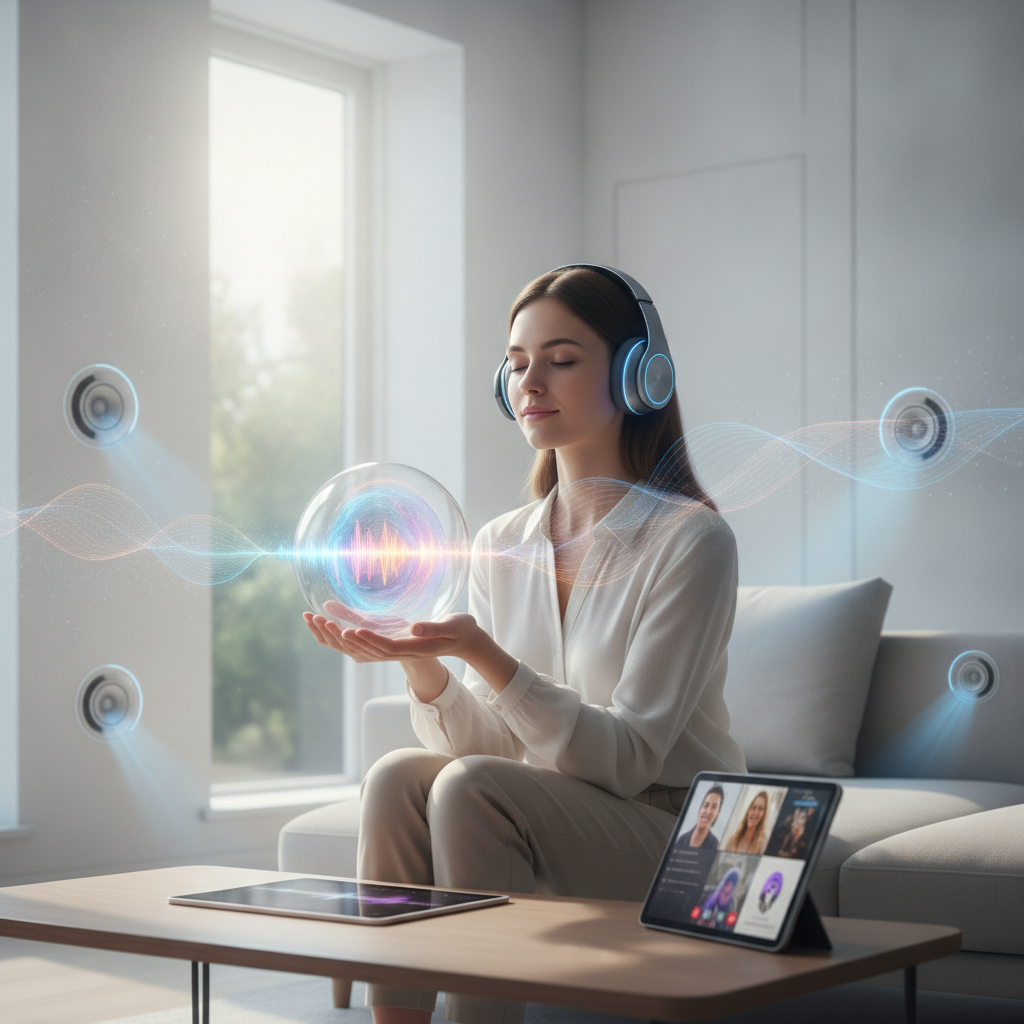
Sound has always been more than a sense — it's an orientation system, a mood setter, and one of the most immediate ways human beings connect with the world around them. Spatial audio technology is now reshaping that experience at a fundamental level, moving audio from a flat, stereo plane into something far more dimensional and alive. From streaming platforms to workplace communication tools, the shift is already well underway.
What Spatial Audio Actually Means
Spatial audio is an umbrella term for technologies that simulate three-dimensional sound environments through standard headphones or speaker setups. Rather than delivering audio as a left-right stereo field, it positions sounds above, below, and around the listener using a combination of signal processing, psychoacoustic principles, and head-related transfer functions — algorithms that mimic how the human ear naturally perceives directionality. The result is an immersive soundscape that feels less like listening through a device and more like being physically present in a space.
The underlying science isn't new, but the hardware and software required to deliver it convincingly at consumer scale is. Advances in chip processing and real-time audio rendering have brought what once required expensive studio equipment into everyday earbuds and headphones.
How Music Streaming Platforms Are Adopting the Format
Apple Music and Tidal were among the first major streaming services to roll out spatial audio tracks at scale, with Dolby Atmos mixing becoming an increasingly standard part of how albums are prepared for release. Listeners using compatible AirPods or Sony WH-series headphones can now hear vocals placed in distinct positions, instruments spread across a more realistic sonic field, and low-frequency elements that feel grounded rather than compressed.
For artists and producers, this introduces a genuinely new creative dimension. Mixing for spatial audio isn't simply adding reverb — it requires rethinking how each element of a track occupies space. Some genres, particularly orchestral, jazz, and ambient electronic music, benefit dramatically from this approach. Others, like compressed pop production, require more careful handling to avoid sounding disjointed when elements are pulled apart spatially.
The Podcast Experience Gets a Quiet Upgrade
Podcasts have historically been among the most acoustically modest formats in digital media — two or more people speaking into microphones, delivered in stereo at best. Spatial audio is beginning to change that assumption. Producers working with narrative and documentary formats are experimenting with soundscapes that place ambient sound, music beds, and voice tracks in distinct positions, creating something closer to audio theater than traditional radio.
Platforms like Spotify have begun supporting spatial-ready content, and independent creators with access to binaural recording equipment are producing immersive episodes that reward careful listening. The effect is subtle but meaningful — a well-designed spatial podcast places the host's voice directly ahead while environmental sounds envelop the listener, reducing fatigue and increasing engagement during longer sessions.
Spatial Audio in Video Calls and Remote Collaboration
Workplace communication is where spatial audio may have its most practical and immediate impact. In a standard video call, all participants sound as though they're coming from the same point in space — a flat, undifferentiated wall of voices that contributes to the cognitive load associated with remote meetings. Spatial audio tools, already integrated into platforms like Microsoft Teams and being developed further by Zoom, assign each participant a distinct audio position, mimicking the natural experience of sitting around a physical table.
This seemingly simple change reduces the mental effort required to track multiple voices and follow conversational flow. Early adoption among remote-first companies suggests that spatial meeting audio improves comprehension during group discussions, particularly in calls with five or more participants. As hybrid work remains standard, this technology is moving from novelty to infrastructure.
Hardware and Headphones Driving Adoption Forward
The quality of spatial audio depends heavily on the hardware reproducing it. Apple's AirPods Pro and AirPods Max brought dynamic head tracking — which adjusts audio position as the listener moves their head — to a mass consumer audience. Sony, Bose, and Samsung have followed with their own implementations, each with slightly different approaches to how head movement data is processed and applied.
Head tracking is particularly significant for video and gaming contexts, where maintaining a fixed virtual soundstage as a listener turns their head adds a powerful layer of presence. Without it, spatial audio can feel more like a fixed panoramic effect than true immersion. The continued refinement of motion sensors and low-latency signal processing in consumer headphones is making that distinction increasingly irrelevant.
Getting the Most From Spatial Audio Right Now
If you want to explore spatial audio without a significant hardware investment, a few entry points stand out. Enabling Dolby Atmos in Apple Music's settings — available on iPhone, iPad, and Mac — requires only a compatible pair of AirPods or supported headphones. Tidal's HiFi Plus tier offers a similar catalog of spatially mixed tracks that work with a broader range of third-party headphones.
For video calls, check whether your organization's version of Microsoft Teams has spatial audio enabled in the audio settings panel — it's often off by default. If you're curious about binaural podcast production, searching for terms like "immersive audio" or "binaural storytelling" on Spotify will surface independent creators already working in this space. You don't need to upgrade your entire audio setup to notice the difference — even modest wireless earbuds reveal meaningful improvement on well-mixed spatial content.
Spatial audio is maturing from an experimental feature into a core expectation across music, podcasts, and professional communication. As more content is produced natively in immersive formats and hardware continues to improve, the flat stereo experience that defined digital audio for decades will increasingly feel like the exception rather than the norm. The shift is gradual but unmistakable — and it's redefining what it means to truly hear something.